
Wimbledon wheelchair tennis guide: History, events, rules & key players
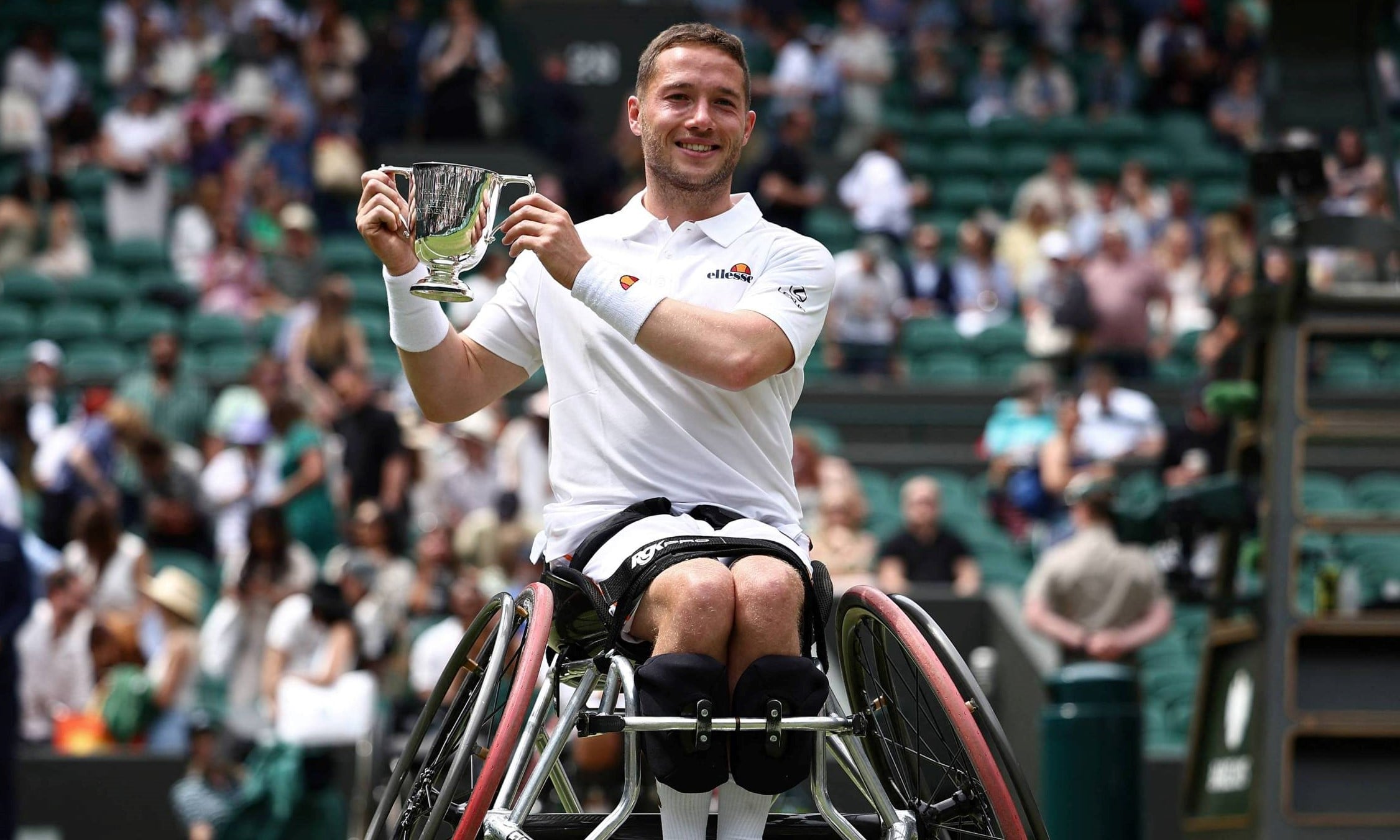
Wheelchair tennis is one of the most exciting parts of The Championships, Wimbledon every season – with the best players in the world competing for one of the four biggest prizes in the calendar.
Find out everything you need to know about wheelchair tennis at Wimbledon, including the history, the draws, rules, who’s playing and where you can follow.
What are the doubles events at Wimbledon?
Wimbledon has two wheelchair tennis classifications with both singles and doubles draws:
- Open
- Players have a permanent physical impairment that results in substantial loss of function in one or both lower extremities (legs) and that meets or exceeds the sports eligibility criteria
- Events are split into women’s and men’s draws
- Quad
- Players have a permanent physical impairment that results in substantial loss of function in one or both lower extremities (legs) and one or both upper extremities (arms/ hands and may include level of trunk function)
- Events can be mixed gender
The women’s and men’s singles draws are made up of 16 players, with eight teams in the doubles.
There are eight players competing in the quad singles and four teams in the quad doubles.
When did wheelchair tennis start at Wimbledon?
Wheelchair tennis was introduced with a men’s doubles event in 2005, which was won by British legend Jayant Mistry. It was the second Grand Slam tournament to host wheelchair tennis tournaments after the Australian Open the year before.
Women’s doubles was later added in 2009, and the women’s and men’s singles events were introduced in 2016 – with Gordon Reid winning the first men’s singles title.
In 2019, Wimbledon hosted its first quad singles and doubles tournaments, where Andy Lapthorne combined with Australian Dylan Alcott to win the title.
What are the different rules in wheelchair tennis?
The main rule change with wheelchair tennis is that the ball is allowed to bounce twice in both singles and doubles competitions.
Otherwise, all the rules of tennis still apply.
How does wheelchair tennis scoring work at Wimbledon?
Wheelchair tennis matches at Wimbledon are played as best of three tie-break sets.
In singles, this is played as three full tie-break sets. In wheelchair doubles, if the score is level at one set all, the final set is played as a match tie-break up to 10 points.
Wheelchair tennis players to watch out for at Wimbledon 2026
British No.1 and world No.2 Alfie Hewett will be looking to add a second Wimbledon singles title to his collection, after lifting the trophy in 2024.
He’ll be joined by 2016 winner Gordon Reid, with the two Brits also combining to try and win the men’s wheelchair doubles for a seventh time.
Keep an eye out for world No.1 and two-time champion Tokito Oda, as well as Spain’s Martin De La Puente and Argentina’s Gustavo Fernandez. Britain’s Ben Bartram and Andrew Penney are also set to feature as two rising stars.
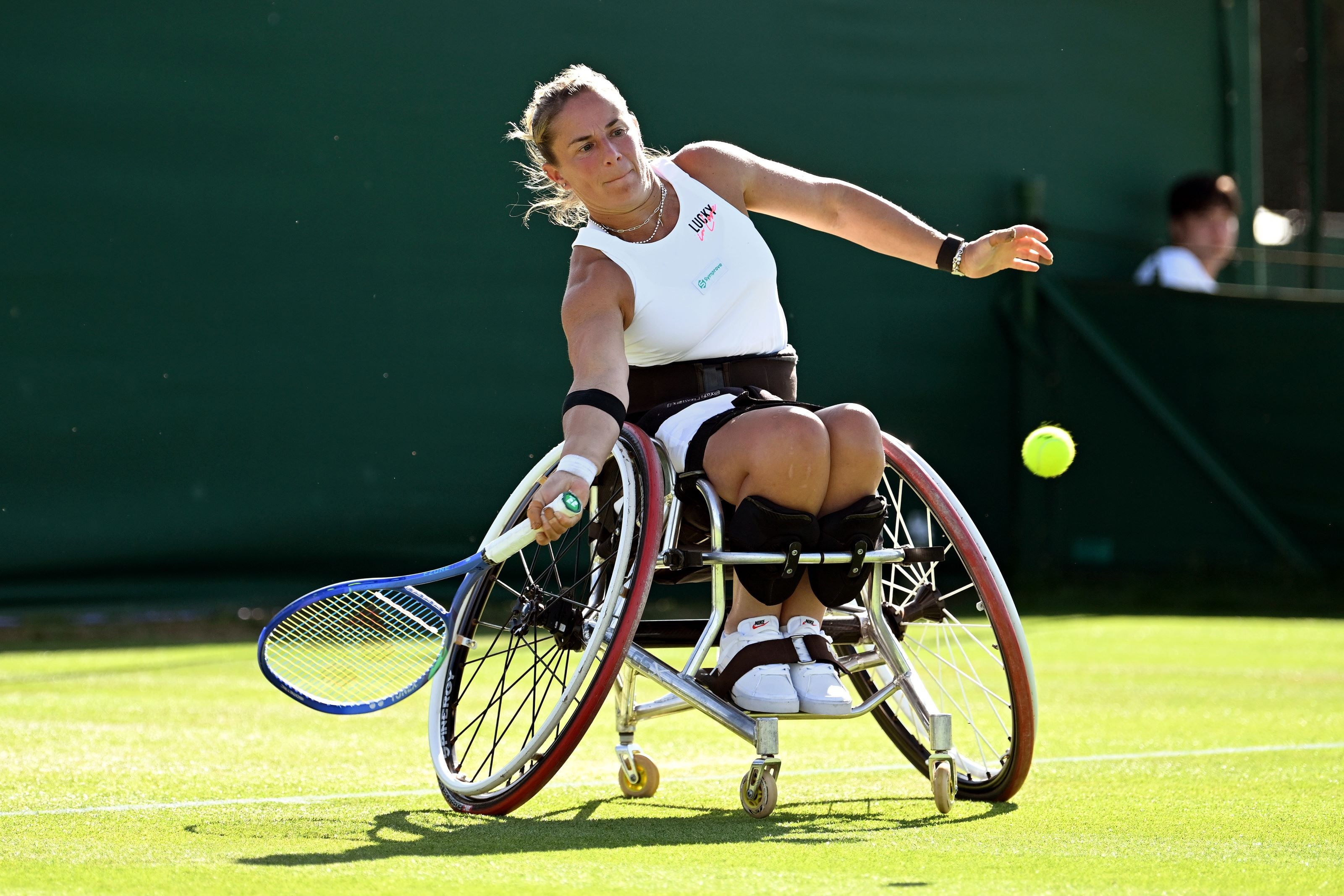
Britain’s Lucy Shuker and Cornelia Oosthuizen have wild card entries into the women’s singles this year, where they will compete with the likes of world No.1 Yui Kamiji, reigning champion Xiaohui Li and Netherlands’ Diede de Groot.
On the quad entry lists, new British No.1 Greg Slade and former doubles champion Andy Lapthorne head up the home challenge. Sam Schroder, Niels Vink, Guy Sasson and Jin Woodman will all be serious contenders for silverware this year.
How to follow wheelchair tennis at Wimbledon 2026
You can watch all the wheelchair tennis matches from Wimbledon 2026 across the BBC, BBC Sport and BBC iPlayer.
Check out the draws, schedule and live scores via the links below:
2026 Wimbledon wheelchair tennis prize money
Men’s and women’s wheelchair singles
|
Round |
Prize money |
|
Winner |
£82,000 |
|
Runner-up |
£43,000 |
|
Semi-final |
£29,000 |
|
Quarter-final |
£20,000 |
|
First round |
£12,800 |
Quad singles
|
Round |
Prize money |
|
Winner |
£82,000 |
|
Runner-up |
£43,000 |
|
Semi-final |
£29,000 |
|
Quarter-final |
£20,000 |
Men’s & women’s doubles
|
Round |
Prize money |
|
Winners |
£36,000 |
|
Runners-up |
£18,000 |
|
Semi-final |
£11,000 |
|
Quarter-final |
£6,500 |
Quad doubles
|
Round |
Prize money |
|
Winner |
£36,000 |
|
Runner-up |
£18,000 |
|
Semi-final |
£11,000 |
British wheelchair tennis champions at Wimbledon
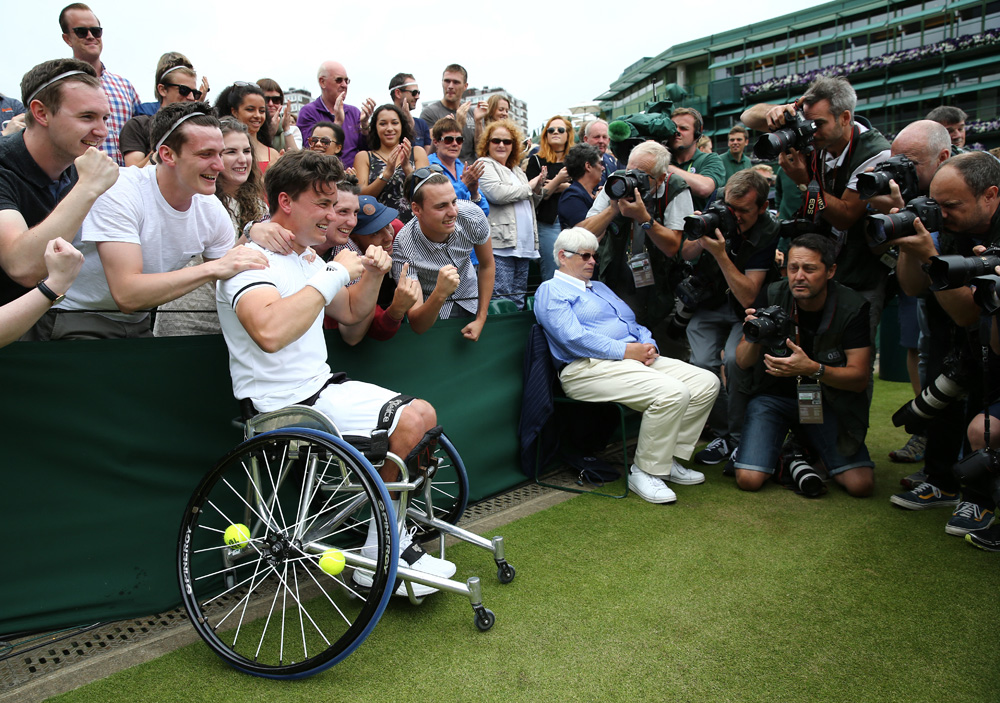
There have been several British wheelchair tennis champions at Wimbledon since 2005 – here’s a full list of former winners:
Men’s wheelchair singles:
- 2016 – Gordon Reid
- 2024 – Alfie Hewett
Women’s wheelchair singles:
There have been no British women’s wheelchair singles champions at Wimbledon during the Open Era.
Quad wheelchair singles:
There have been no British quad wheelchair singles champions at Wimbledon during the Open Era.
Men’s wheelchair doubles:
- 2005 – Jayant Mistry (with Michael Jeremiasz)
- 2016 – Alfie Hewett & Gordon Reid
- 2017 – Alfie Hewett & Gordon Reid
- 2018 – Alfie Hewett & Gordon Reid
- 2021 – Alfie Hewett & Gordon Reid
- 2023 – Alfie Hewett & Gordon Reid
- 2024 – Alfie Hewett & Gordon Reid
Women’s wheelchair doubles:
- 2014 – Jordanne Whiley (with Yui Kamiji)
- 2015 – Jordanne Whiley (with Yui Kamiji)
- 2016 – Jordanne Whiley (with Yui Kamiji)
- 2017 – Jordanne Whiley (with Yui Kamiji)
- 2021 – Jordanne Whiley (with Yui Kamiji)
Quad wheelchair doubles:
- 2019 – Andy Lapthorne (with Dylan Alcott)
- 2021 – Andy Lapthorne (with David Wagner)
Who has won the most wheelchair tennis titles at Wimbledon?
- Men’s wheelchair singles – Stefan Olsson (SWE) & Tokito Oda (JPN): Two titles
- Women’s wheelchair singles – Diede de Groot (NED): Six titles
- Quad wheelchair singles – Niels Vink (NED): Three titles
- Men’s wheelchair doubles – Alfie Hewett (GBR) & Gordon Reid (GBR): Six titles
- Women’s wheelchair doubles – Yui Kamiji (JPN): Eight titles
- Quad wheelchair doubles – Niels Vink (NED): Four titles