
50 years of wheelchair technology in tennis
• 4 minute read
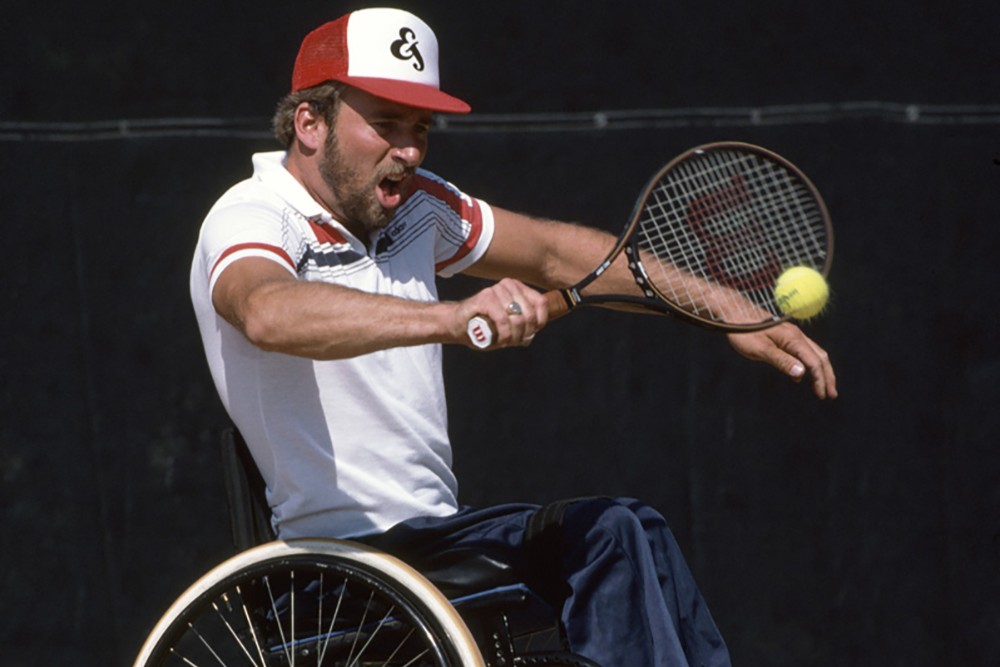
This year marked the 50th anniversary of the birth of wheelchair tennis, a story that began with American Brad Parks in 1976.
It has inspired five decades of remarkable sporting achievement and technological evolution as documented in our digital exhibition.
Parks’ refusal to accept that his sporting days were over after a skiing accident inspired him to team up with fellow American Jeff Minnebraker and map out a vision for a version of tennis that has become a key part of the game’s four Grand Slam tournaments.
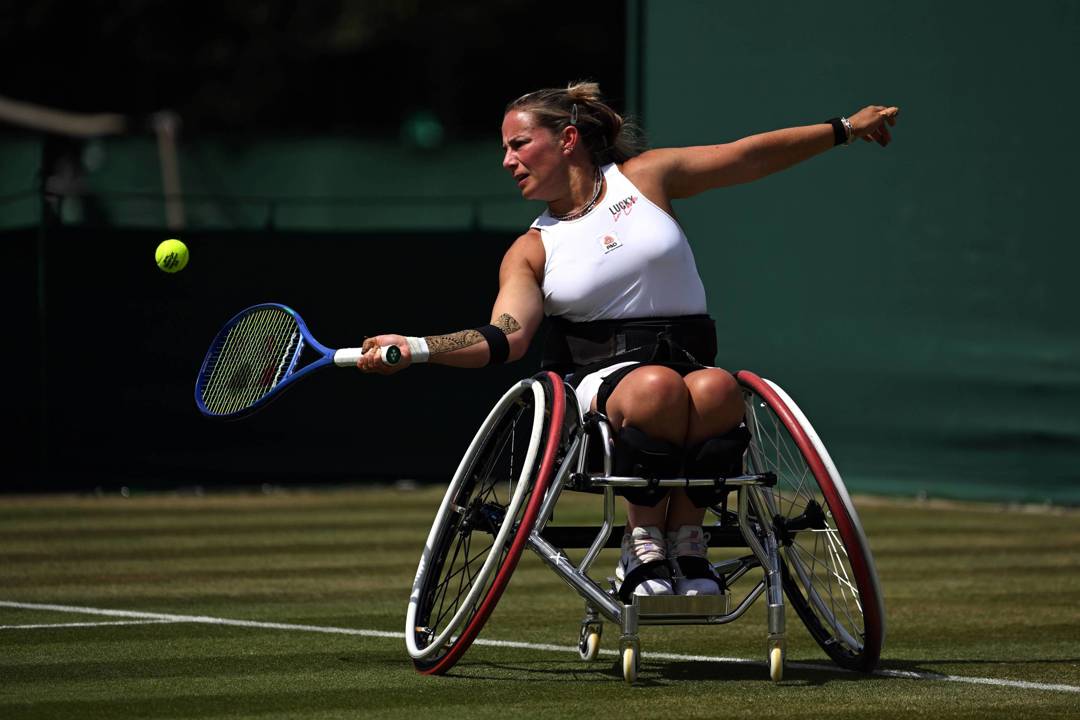
British heroes Gordon Reid, Alfie Hewett, Lucy Shuker and Andy Lapthorne are among those who have led the way in spreading the wheelchair game’s inspirational message, with one of the key tools they need to weave their magic on court embarking on its own journey over the course of the last century.
The chairs Parks and Minnebraker were sitting in when they defined the rules for a new version of the game back in 1976 are very different to the machines being used by the best in the game today, with British legend Reid perfectly placed to reflect on the technological changes in the chair that have propelled him to secure a remarkable 30th Grand Slam doubles title alongside partner Hewett at last month’s US Open.
The right chair is like the perfect pair of shoes in our sport. You want to feel comfortable on the court and you don’t want your opponent to have the advantage with his equipment.
“When I started, I was in a chair that was way too big for me and quite old, so I had to get my own chair to be able to play at the top level,” reflects Reid.
“The right chair is like the perfect pair of shoes in our sport. You want to feel comfortable on the court and you don’t want your opponent to have the advantage with his equipment.
“The top-of-the-range chairs are expensive, but you can get varying levels if you are not going for the maximum spec and you need to play for a while to understand what kind of chair works for you.
“It’s important to understand where you want to sit, what height you need to be to feel comfortable on court. Everyone is a little different and it’s very personal on what feels better for you.”
Hewett continued his winning form in Grand Slam events by lifting both the singles and doubles titles at the US Open, before he helped Great Britain lift the World Team Cup title alongside teammates Reid and Ben Bartram at the USTA National Campus in Orlando last month.
The Norfolk champion has been one of the pioneers of the wheelchair game and he reflects on the steps forward in wheelchair development as a key element in the rise of the sport.
“There have been so many steps forward with wheelchairs since I started in tennis,” states Hewett. “It’s very much like a cyclist getting the best bike and it can make a big difference. If you are driving a brand new car that has all the modern technology on it, it’s going to perform better than a car with an old number plate and it’s no different with the chair we use.
“The technology that has gone into chairs can cost a lot of money to research and make, so I’m very lucky to be supported by RGK and thankfully they help me with that.
“It can be tough for players who are not in my position to spend a lot of money getting a very specific chair that makes a difference when they are on court.”
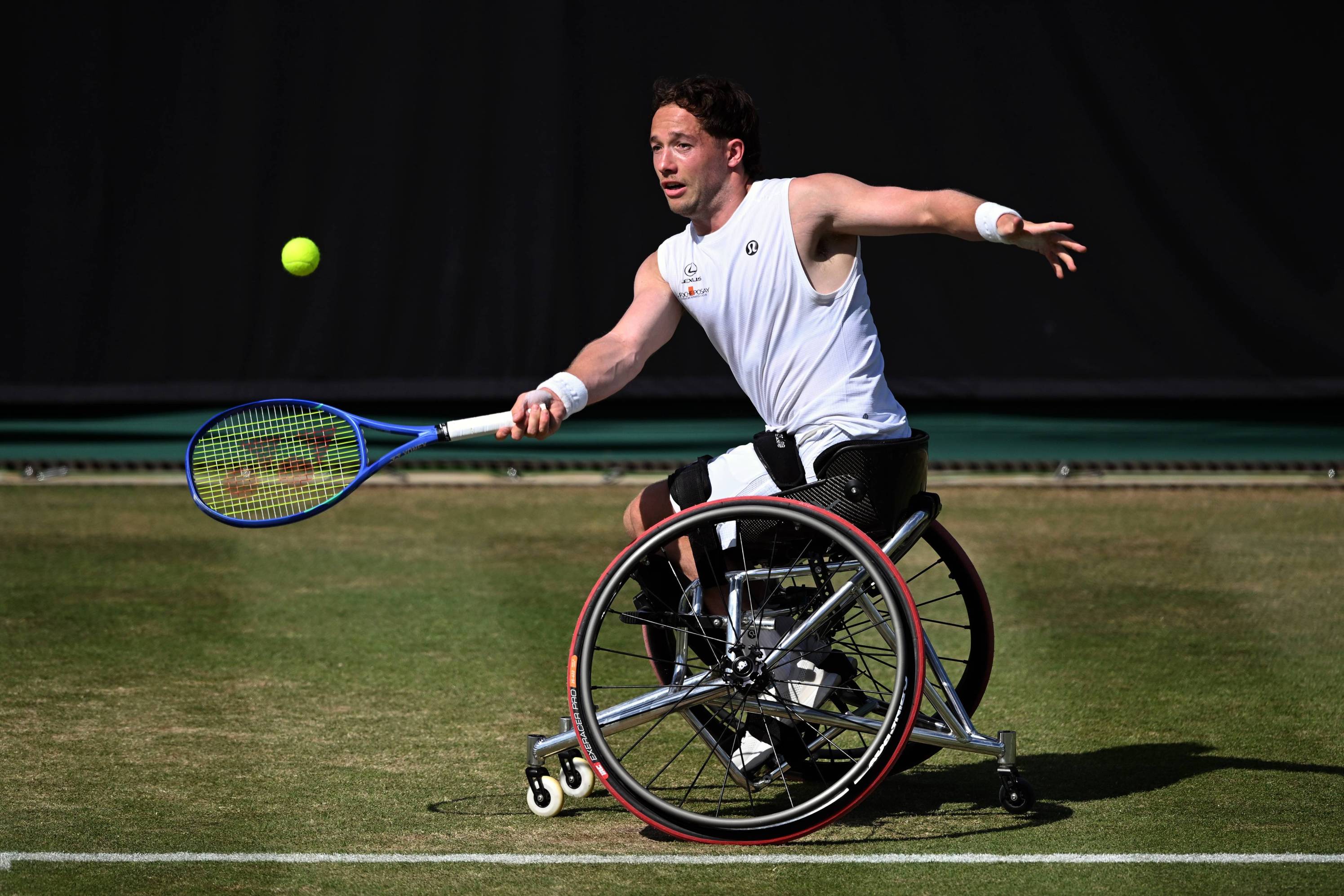
The LTA’s Wheelchair Performance Pathway has provided a route into the sport for champions such as Hewett, while innovative designers at RGK Wheelchairs have helped give athletes the equipment and technology they need to maximise their potential.
RGK has been at the forefront of technical developments in the chairs we see both in Grand Slam tournaments and at club level, with Mike Prosser reflecting on a journey that has taken the chairs to impressive levels of technical engineering.
An elite tennis chair is much more than a lightweight wheelchair. It is a highly individual piece of sports equipment designed around the player.
“The evolution in wheelchairs has been enormous,” begins Prosser. “Twenty years ago, sports wheelchairs were generally heavier, often built from steel, and there was much less opportunity to optimise every aspect of the chair around the individual player.
“Advances in aluminium, including heat-treated materials, alongside carbon fibre and improved manufacturing techniques have allowed chairs to become lighter and stronger. But arguably the biggest development has been the move from relatively standard sizes towards genuinely made-to-measure performance equipment.
“At RGK, we now work from around 30 individual measurements to build a chair to millimetre-level precision around the athlete.
“And it isn’t just the frame. Rear wheel size, caster configuration, bearings, hand rims, tyres for different court surfaces, seating and positioning can all be considered as part of the overall setup.
“That understanding has been built over decades of working with players with different body shapes, classifications, disabilities and playing styles, including quad tennis.
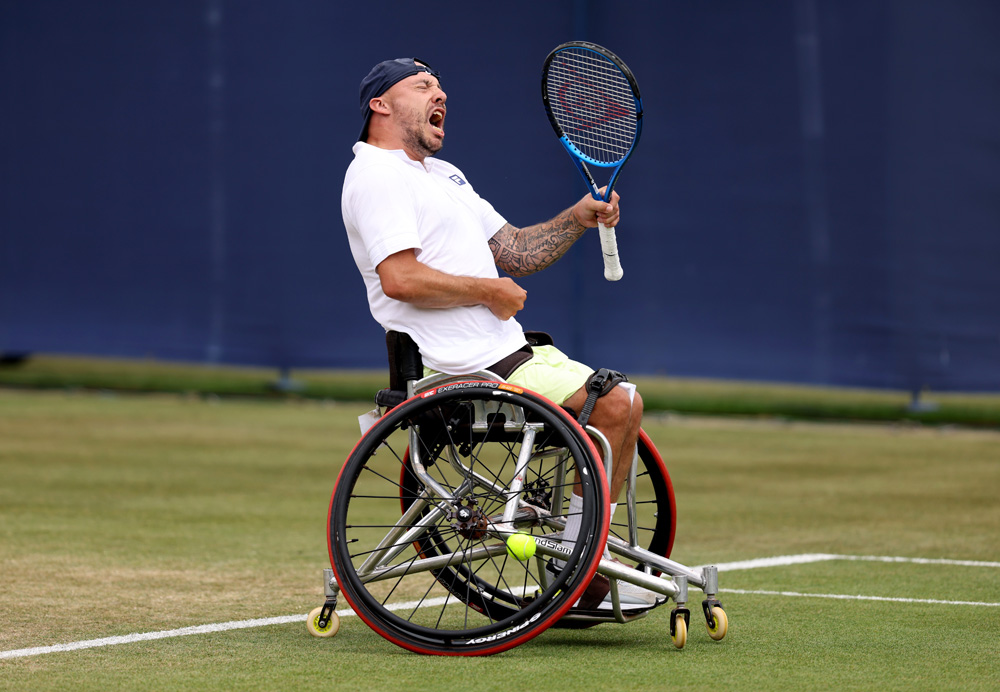
“We have also worked alongside organisations including the LTA, Loughborough University and UK Sport to understand how relatively small changes to a chair can influence movement and performance.
“Today, an elite tennis chair is much more than a lightweight wheelchair. It is a highly individual piece of sports equipment designed around the player.
“RGK has worked with the LTA to support developing players, including discounts for players within the performance pathway and support for LTA members progressing from more entry-level equipment towards a made-to-measure sports chair.
“We want innovation at the top of the sport to sit alongside opportunities for more people to progress through the sport.”
The race to find the next step in the chairs used by top players never stops and RGK are looking at new developments that could take the performance of athletes to the next level.
“Seating and positioning are particularly interesting areas because the connection between the athlete and the chair is fundamental to how effectively they can move and generate power,” added Prosser. “There is also further development possible around tyres, casters, materials and athlete-specific setups.
“The key is that innovation must be driven by what genuinely helps athletes perform. That means continuing to bring together feedback from leading players, coaches, governing bodies such as the LTA, performance specialists and our own engineering expertise.
“We see the next generation of sports chairs developing through that collaboration. After decades of progress, there are still marginal gains to find — and at elite level, those small gains can matter enormously.”
Wheelchair tennis has come a long way on and off the court over the last 50 years, with the champions on the court aided by the innovators off it.
Celebrate 50 years of sporting achievements and technological developments by exploring our digital exhibition.


