Gabby Tarasovaite reflects on the impact tennis has had on her life and the importance of the LTA deaf tennis pathway
• 2 minute read
Tennis has been a huge part of Gabby Tarasovaite’s life since the age of 10, but everything in her world changed in 2020.
After being diagnosed with the rare and serious condition Autoimmune Encephalitis, Gabby spent six months in hospital, including time in intensive care.
When she emerged from the most challenging period of her young life, her focus was shifted from winning tennis matches to rebuilding her life.
She had to relearn how to walk and also lost part of her hearing, but her remarkable recovery eventually took her back onto a tennis court and towards fresh horizons.
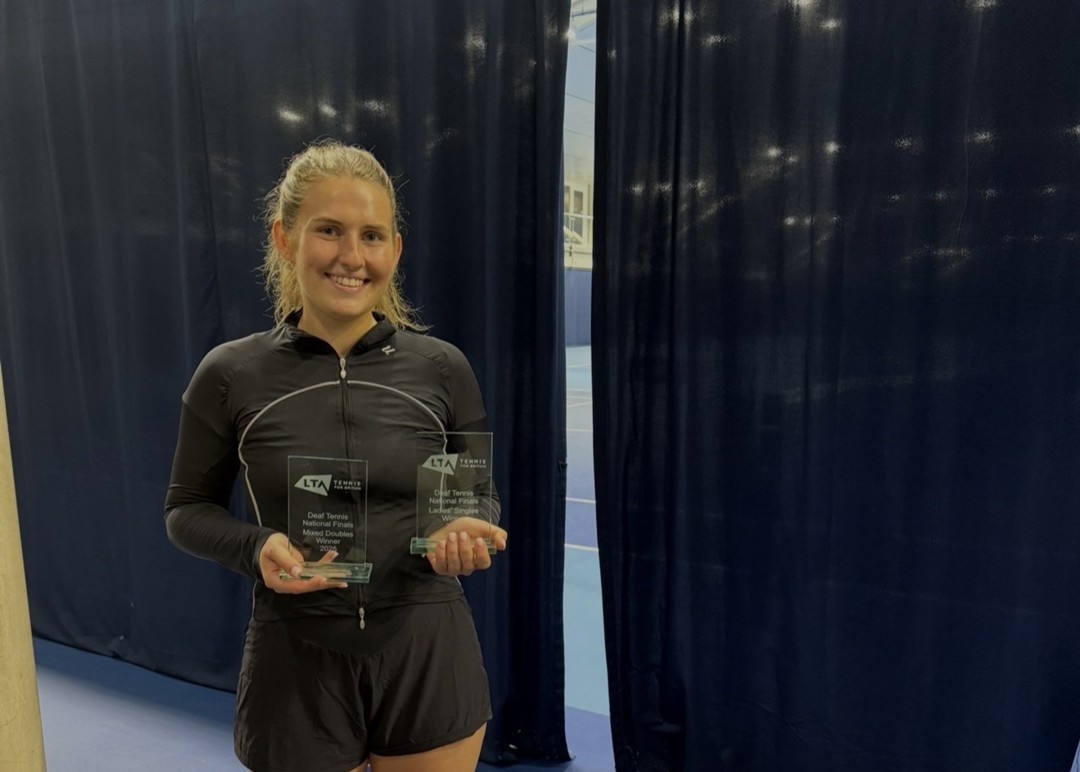
Deaf tennis provided a vital outlet for Gabby as she fought her way back to health and after winning the 2024 Deaf Tennis National Finals, a call-up to the Great Britain team followed shortly after.
Gabby successfully defended her National title last year and is now looking forward to competing at an International Committee of Sports for the Deaf (ICSD) Open tournament in the coming months, after receiving a grant from the LTA.
Here, she looks back on her story in tennis so far, in an interview coinciding with Deaf Awareness Week.
How important is tennis to you in your life?
Tennis is a really important part of my life. It’s given me a sense of community. It has helped me build confidence and provided a positive focus, especially after losing my hearing. It also played a huge role in my rehabilitation after being diagnosed with autoimmune encephalitis in 2020, both cognitively and physically.
I still remember my coach seeing me for the first time after I fell ill because there was real uncertainty about whether I would ever return to tennis. That moment has always stayed with me, and it makes everything I’ve achieved since feel even more meaningful. Tennis continues to motivate me, gives me purpose, and reminds me how far I’ve come. It’s something I’m incredibly grateful for and something that drives me to keep moving forward.
Tell us about the start of your tennis journey. Where did you learn to play and who were your early inspirations?
I started playing tennis at the age of 10, mainly to be part of a community and for the social side of the sport. I began at my local club, and as I got more involved, I started having lessons with the head coach and became interested in competing. Through tennis, I met people of all ages and abilities, made great friends, and discovered a competitive side to myself that I hadn’t seen before. Since then, I’ve just wanted to keep improving and pushing my game forward.
When did you learn about deaf tennis?
A couple of years after losing my hearing. I played my first National Championships in 2024, where I met the team and made my debut. After that, Catherine Fletcher, the LTA’s National Deaf Tennis Coach, approached me and spoke to me about the opportunity to be part of the LTA’s deaf tennis team, which was a really important moment for me.
Can you explain the challenges of playing tennis when your hearing is impaired, or you are deaf?
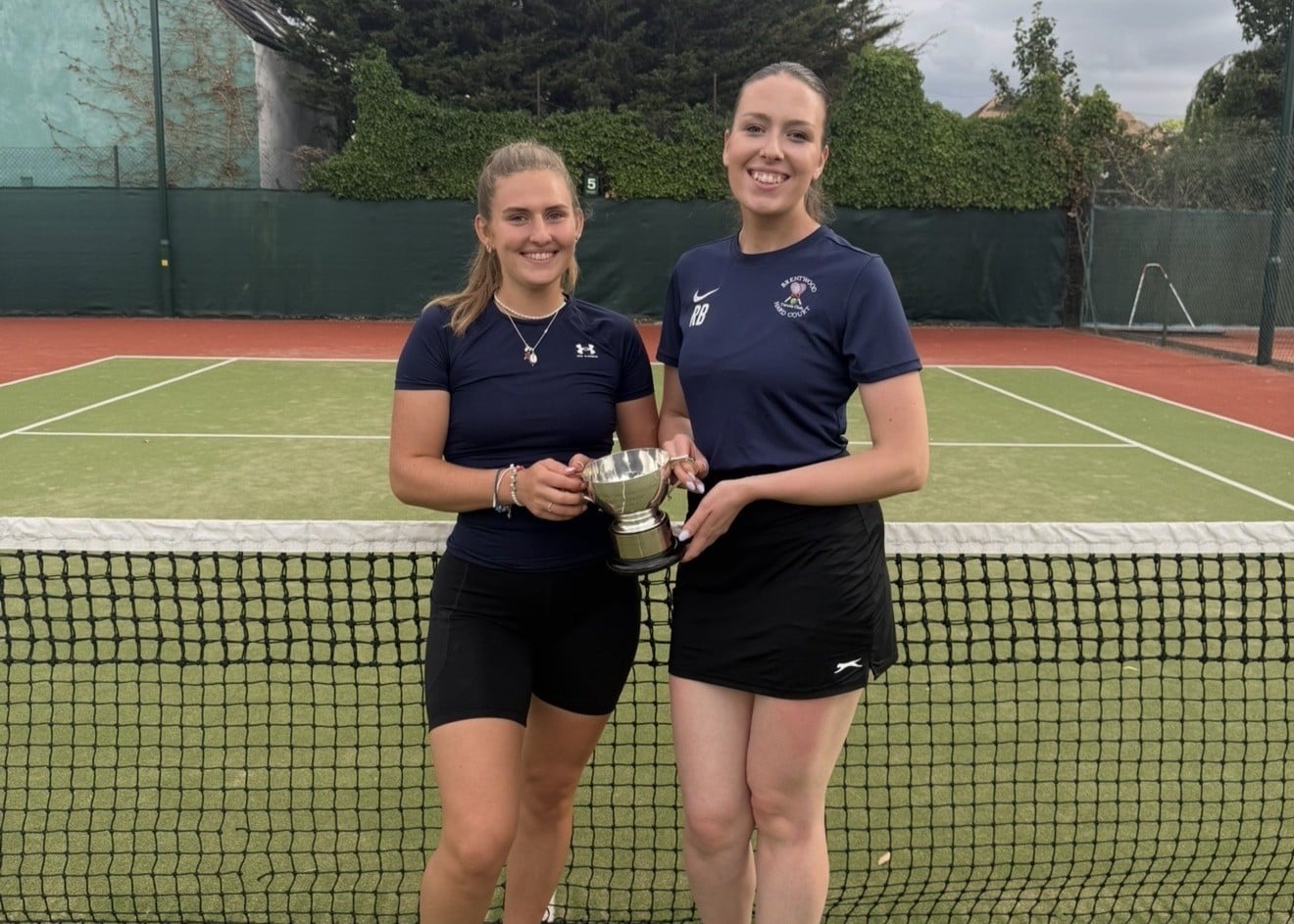
One of the main challenges is communication, although that’s improved a lot thanks to my coach, Kirk Butler at Brentwood Hard Tennis Club in Essex, and the social group at my club. On court, I’ve had to become much more observant, as I can no longer rely on my hearing. In doubles especially, I’ve had to adapt by building trust with my partner and picking up on visual cues instead. Overall, there’s been a lot of adapting since losing my hearing, but it’s also made me more focused and aware in my game.
How do you reflect on defending your title at the National Finals last year and what are your best moments in tennis so far?
Defending my title at the National Finals was a big moment for me and showed how much I’ve grown, particularly in doubles. One of my standout moments was coming back from being down in the singles finals to win a three-hour battle. It really tested my resilience and ability to handle pressure. Experiences like that have been some of my best moments so far, and I know there’s still a lot more to learn, which I’m really enjoying.
What are your ambitions in tennis moving forward?
My ambitions are to keep improving my game, compete at higher levels, and represent deaf tennis internationally. I want to challenge myself against the best players and continue pushing my limits while hopefully inspiring others along the way.
How have the LTA helped you in your tennis story so far and how important is it to have the governing body backing deaf tennis?
The Lawn Tennis Association have supported my journey by creating opportunities to compete and be part of the deaf tennis pathway. Being involved in competitions like the Nationals and connecting with the deaf tennis team has been a big step in my development. Having the backing of a governing body is so important as it gives deaf tennis visibility, structure, and recognition. It helps players feel valued and supported, and it creates more opportunities for people to get involved and progress within the sport.
It would be good to see more female players competing in deaf tennis, so what would your message be to women and girls who may read this?
My message would be to just give it a go and not be afraid to step into something new. Tennis can feel intimidating at first, but it’s such a welcoming and rewarding sport once you get started. It’s a chance to meet new people, learn new skills and have fun! Being deaf or having a hearing impairment shouldn’t hold you back. In many ways, it can make you more determined and resilient. There’s a real sense of community in deaf tennis, and the more women and girls who get involved, the stronger and more inspiring that community will become.
For those looking to compete, the LTA stages a year-round disability tennis competitions calendar to give disabled people and those with long-term health conditions a chance to compete in learning disability and autism, deaf, para standing, visually impaired, and wheelchair tennis. In 2026 the LTA has significantly increased investment in disability tennis competitions and exhibitions by nearly 25%.