
Find the right tennis shoes for you: Essential guide
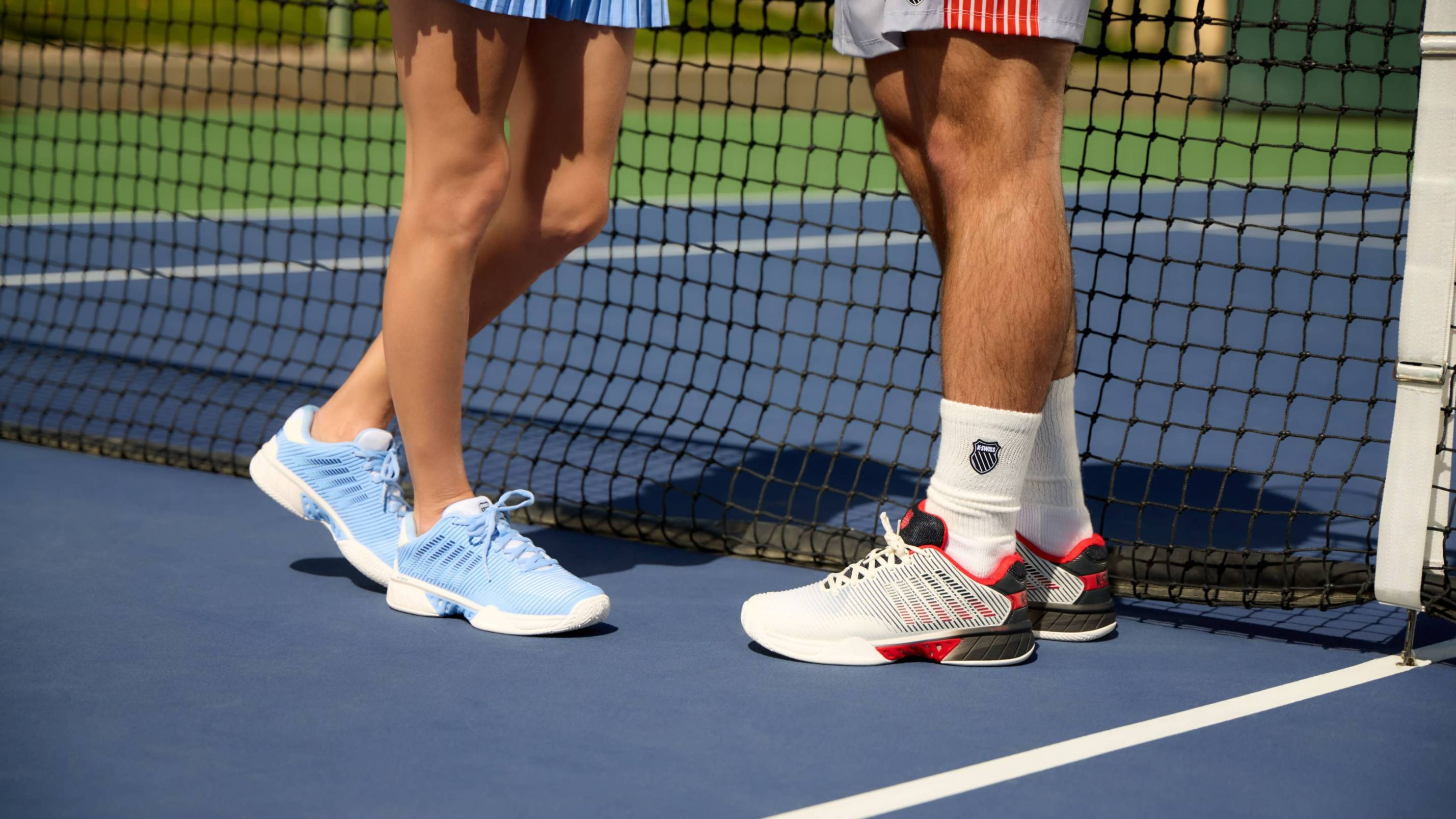
The right pair of tennis shoes can make a huge difference in your performance and comfort on the court.
If you're a complete beginner, we suggest using a comfortable pair of trainers when you start out but as you play more you may want to consider a tennis-specific shoe.
Whether you're a casual player or a competitive athlete, selecting trainers that match your playing style, foot type, and court surface is essential to preventing injuries and enhancing movement.
Our partners at Pro:Direct have pulled together an essential guide on what key factors to consider when choosing the perfect tennis footwear.
Court surface
| Surface | Guide |
| Hard court |
Look for shoes with durable outsoles and added cushioning to absorb impact from the hard surface. Reinforced toe areas can help prevent premature wear. |
| Clay court |
Shoes with herringbone-patterned outsoles provide excellent grip while allowing for smooth slides. Lightweight materials enhance movement on the soft surface. |
| Grass court |
Opt for shoes with small, closely spaced treads for better traction on the slick surface. A flexible design helps with quick movements and adjustments. |
Foot type and support needs
Understanding your foot shape can help you find the right level of support and comfort:
- Flat Feet (Overpronators): Choose shoes with motion control and arch support to prevent excessive inward rolling of the foot.
- High Arches (Supinators): Look for extra cushioning to absorb shock and prevent strain on the feet.
- Neutral Feet: A well-balanced shoe with a blend of support and flexibility will work best.
Playing style
Your movement and playing style should also influence your shoe choice:
- Baseline Players: If you move side-to-side frequently, go for shoes with high lateral support and durable soles.
- Serve-and-Volley Players: A lightweight shoe with reinforced toe protection and grippy soles will help with quick net approaches and frequent toe dragging.
Key features to look for
Cushioning and comfort
- EVA or Gel Midsoles absorb shock and reduce stress on joints.
- Padded collars and insoles provide additional comfort for extended play sessions.
Stability and support
- Reinforced side panels improve lateral stability.
- Midfoot shanks prevent excessive twisting and enhance control.
Traction and durability
- Rubber outsoles with the right tread pattern ensure grip on different surfaces.
- High-abrasion resistance is crucial for players who frequently drag their feet.
FAQs
It depends on usage, but generally, after 45-60 hours of play, you should consider a new pair to maintain support and grip.
Running shoes lack lateral support and durability for court movement, so it's best to use dedicated tennis shoes for safety and performance.
Ensure there’s about a thumb’s width of space between your toes and the shoe’s front. Your foot should feel snug but not too tight.
A court shoe is footwear designed specifically for the quick, multi-directional movements used in sports such as tennis. Unlike running shoes, which are primarily designed for forward movement, tennis court shoes provide lateral support, durable outsoles and court-specific traction to help with side-to-side movement, stopping and changing direction.
The best hard court tennis shoes combine a durable outsole with cushioning and lateral support. Hard courts are abrasive and place more impact through the feet and legs, so look for a hard-wearing sole, reinforced toe area and enough cushioning for comfort. The shoe should also support quick side-to-side movement and provide reliable multi-directional grip.
The best grass court tennis shoes have small, closely spaced treads that provide traction on a surface that can become slippery. A flexible upper and good lateral support also help with quick changes of direction. Choose shoes designed to grip the grass without damaging the court surface.