
Tennis court surface guide: Hard, clay, grass & astroturf
The four main types of tennis court surfaces are hard, clay, grass and artificial surfaces such as astroturf.
Each is made from different materials and affects the height and predictability of the ball bounce, the speed of play, how players move and the style of game that works best.
Hard and astroturf courts are common across Britain because they can support year-round play, while clay and grass offer distinct playing characteristics.
Use the table below to compare the main differences before exploring each surface in more detail.
Key differences between the types of tennis court surfaces:
|
|
What is it? |
Ball bounce / Speed |
Game style |
|
Hard courts |
Tarmac or an acrylic layer over a firm base e.g. Australian Open and US Open |
True, predictable bounce / Medium to fast |
All-court |
|
Clay courts |
A loose mineral surface, or artificial clay with specialist infill e.g. Roland Garros |
Higher bounce / Slow |
Baseline |
|
Grass courts |
Natural grass grown over a firm soil base e.g. Wimbledon |
Lower, less predictable bounce / Fast |
Aggressive |
|
Astroturf courts |
Synthetic grass carpet, usually with sand infill |
Lower, skidding bounce / Fast |
Aggressive |
Hard courts
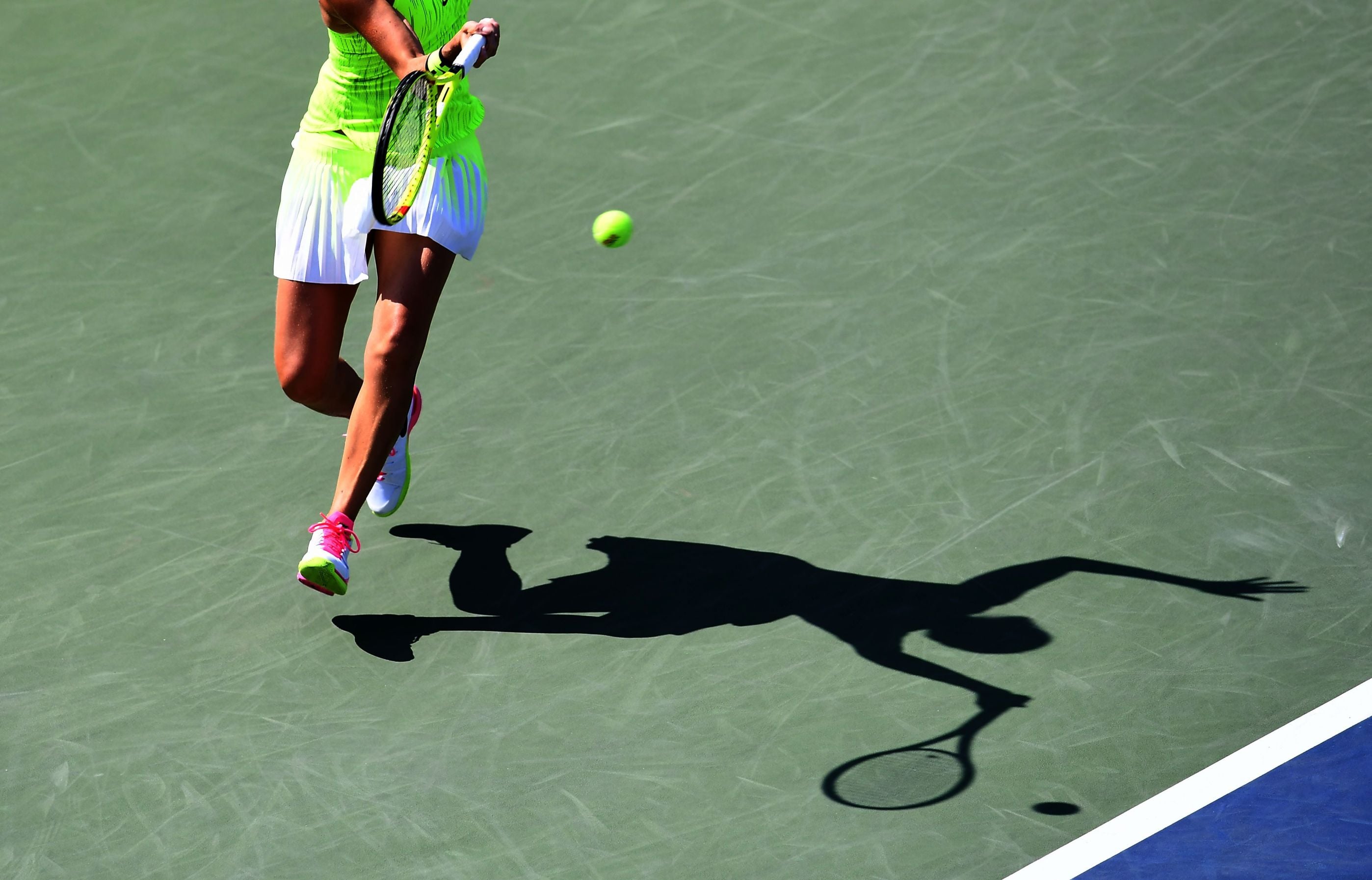
Hard tennis courts have a firm base, usually made from tarmac, asphalt or concrete. Some are finished with an acrylic coating, like the courts used at the Australian Open and US Open.
These courts provide a true, predictable bounce and are widely used across Britain because they are durable and suitable for all-weather play.
How does the ball bounce on a hard court?
On hard courts the ball has what we call a ‘true’ bounce, which means it will bounce exactly how you would expect.
This makes it easier to predict where each shot is going to land and how it will bounce, so you can quickly react in the rally.
The paint used on the court can impact the speed of the court as well. The more sand in the paint, the more grip it has on the ball, and the slower the court will play.
What type of game style suits a hard court?
Hard courts tend to favour an all-court game – being able to cover the baseline and get into the net when you have the opportunity.
On a hard court, it’s always a good strategy to play to your strengths and the areas of your game where you feel you can be most effective.
It’s also good to throw in some variety. With the bounce being more predictable, giving your opponent different spins and bounces to look at will keep them on their toes.
How should you move on a hard court?
Hard courts offer more grip than clay, grass and astroturf, which makes it easier to push off and change direction quickly.
Clay courts
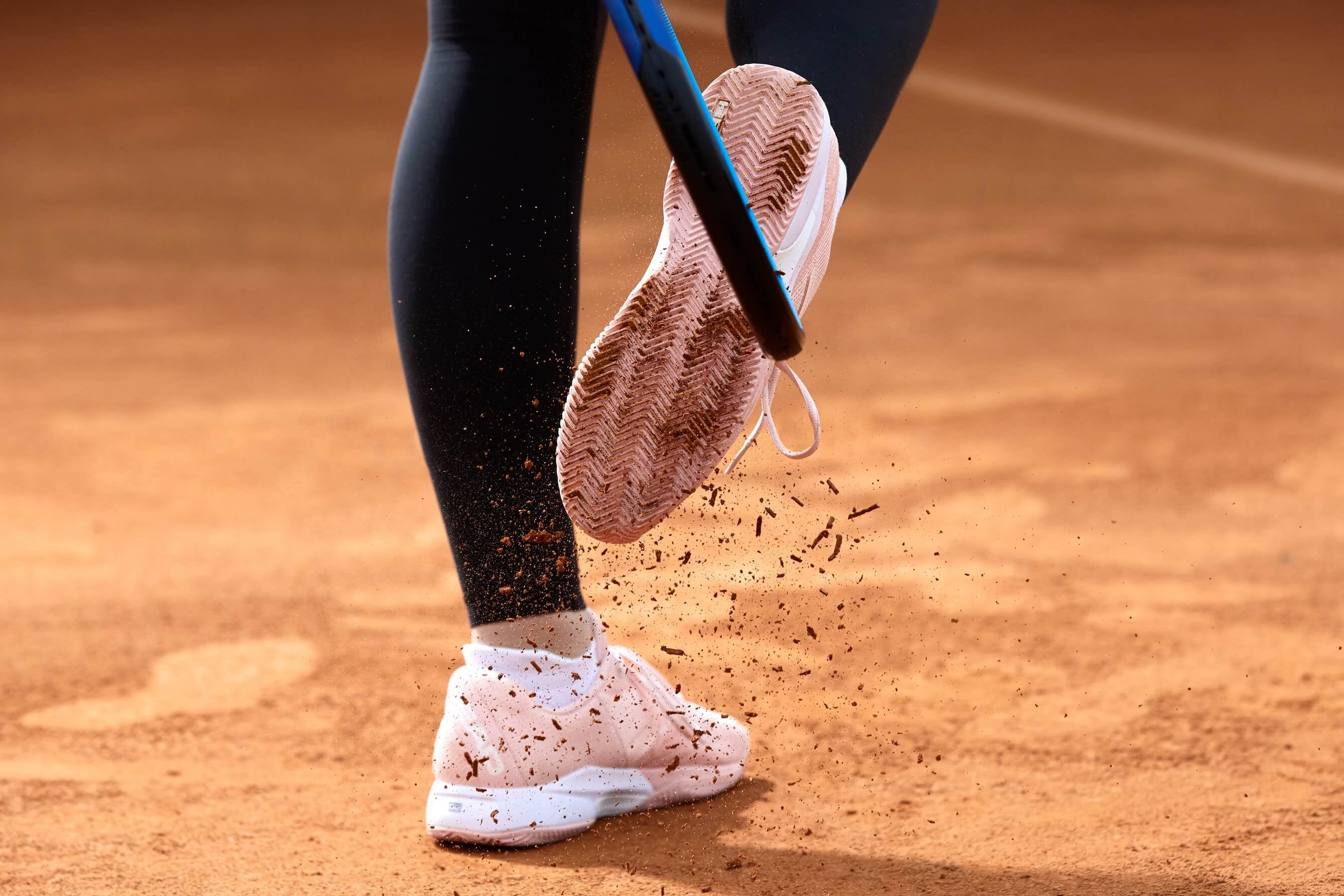
Traditional clay courts have a loose mineral surface made from materials such as crushed brick, stone or shale.
Artificial clay courts are increasingly common in Britain and use a synthetic carpet with a clay and sand infill. Both types produce a higher, slower bounce and allow players to slide into shots.
How does the ball bounce on clay courts?
When playing tennis on a clay court, the ball will generally kick up and bounce higher – especially if it’s hit with top spin. This is because the surface is gritty so the ball bounce ‘grips’ more.
Generally, clay courts will play slower than other surfaces, which makes for lots of long rallies.
What type of game style suits clay courts?
As the ball tends to sit up more and plays slower on clay courts, you tend to have lots of rallies at the baseline with fewer direct winners.
The clay tends to favour players who like to play aggressively from the back of the court and like to hit the ball with heavy top spin and high net clearance. People who are good movers tend to like clay courts.
It can be a more physical surface to play on, and you have to play high percentage tennis to stay in the points. Players tend to stand further behind the baseline to account for the higher bounce and give themselves a bit more time to deal with inconsistent bounces.
How should you move on a clay court?
The loose surface of a clay court makes it harder to stop and change direction. That’s why you see more players sliding on the clay to help push off again after hitting a shot. This helps you slow down after running to a shot and allows you to get back in position quicker.
As it’s a more unnatural movement, it’s worth spending more time practicing on court, so you feel more comfortable next time you’re having a hit or playing a match.
You can get specific clay court trainers with a larger herringbone to gain some extra grip. Generally, this surface is more forgiving on knee joints as a lot of energy goes into the sliding action.
Grass and astroturf tennis courts
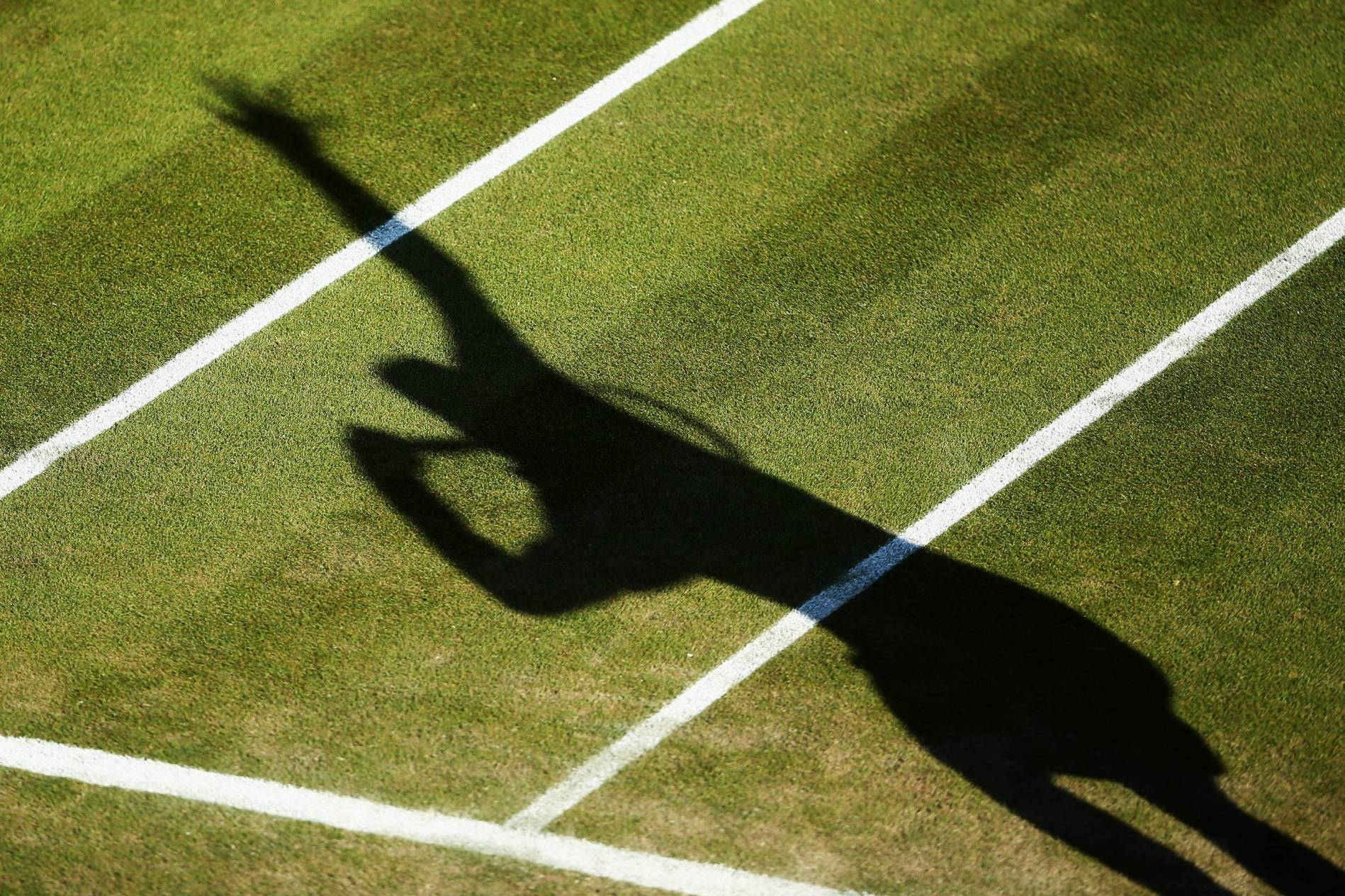
Grass and astroturf are different surfaces but share several playing characteristics. Natural grass is grown over a firm soil base, while astroturf is a synthetic grass carpet that usually contains sand infill. Both generally produce a lower, faster and less predictable bounce than hard or clay courts.
How does the ball bounce on grass and astroturf tennis courts?
Both grass and astroturf tennis courts give the ball a lower bounce, and it can come skidding through quickly – especially on a wet astroturf court.
This makes it harder to predict, and you have to have quick reactions in the rallies.
What type of game style suits grass and astroturf tennis courts?
Grass and astroturf tennis courts suit a more aggressive game style and those with a big serve.
As the ball stays low, skids through and can be more unpredictable – you want to try and get on top of the points early and avoid more baseline exchanges, where it can be harder to react to the ball.
You’ll see lots of players come into the net to avoid the low bounce and stay aggressive early on.
The serve can also be really effective if you have a big, flat first serve, or you can hit it wide with slice.
Slice is also a useful weapon in rallies because it slides on the bounce, therefore it keeps the ball even lower than the usual bounce.
How should you move on a grass or astroturf tennis court?
Grass and astroturf courts are somewhere inbetween hard and clay courts. They aren’t loose on the surface like clay, but don’t have the same amount of grip as hard courts.
While you wouldn’t slide as much as clay – it can be useful on grass and astroturf when you’re moved out of position, especially when the conditions are slightly more slippery.
You can also get specific grass court trainers with pimples on them to help you get more grip on the court.
Book a tennis court
Find your nearest tenis courts and book your next hit.
Tennis court surfaces FAQs
An acrylic tennis court is a hard court with layers of acrylic coating applied over a firm asphalt or concrete base. The coating creates a durable, consistent playing surface, while the amount of sand mixed into it can alter the grip and speed of the court. Acrylic courts are used at tournaments including the Australian Open and US Open.
Astroturf is a commonly used name for an artificial grass sports surface. On a tennis court, it is usually made from synthetic fibres with sand infill. It generally produces a lower, faster bounce than a hard or clay court and can be used throughout much of the year.