Brits fly the flag on the world stage in deaf tennis and learning disability and autism tennis
• 2 minute read
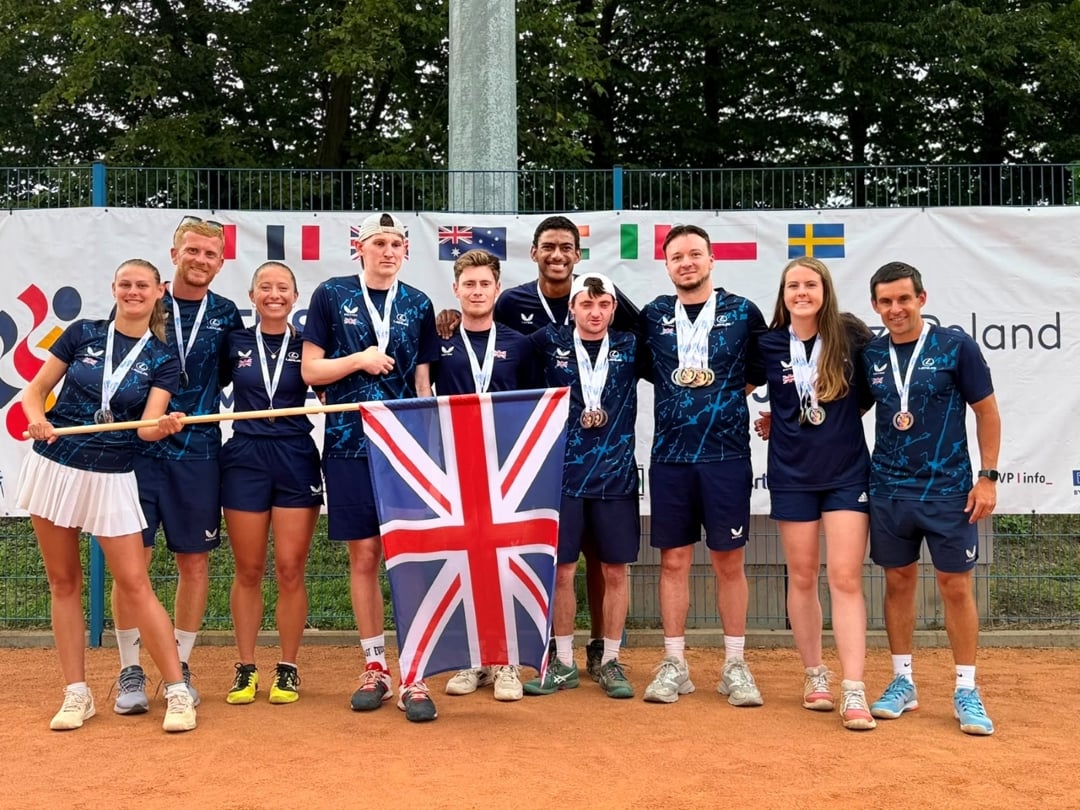
Great Britain teams served up some impressive performances at the Virtus Summer Games in Bydgoszcz, Poland and World Deaf Team Tennis Championships in Grenoble, France, with both events concluding last weekend.
The Virtus European Summer Games welcomed more than 600 participants from 22 countries, as they gathered for a week of elite competition and celebration for athletes with an intellectual impairment from across Europe and beyond.
Lancashire’s Fabrice Higgins emerged as a stand-out performer in the British team as he claimed a gold medal in the World Championships and backed it up with another gold in the European Championships, with both coming in the II1 category.
Higgins also won the doubles at both events with partner Oliver Beadle from Essex, as the duo continued their winning form after they lifted the title at the inaugural Learning Disability and Autism (LD&A) tournament staged at last month’s Lexus Nottingham Open. It was Beadles’s first gold medal at the World Championships.
Anna McBride teamed up with Higgins to win the gold medal in the II1 Mixed Doubles event at both events and she also claimed titles in both singles competitions.
Aidan Moody also showed his battling qualities to produce an inspired performance in Bydgoszcz, as he came from 6-0, 4-0 down to claim a bronze medal in the II1 Men’s Singles at the World Championships and he collected another bronze in the same event at the European Championships.
Lily Mills, Luke Turnbull and Joshua Kerr also left Poland with medals for Great Britain:
World Championships
- Gold II1 Men's Singles - Fabrice Higgins
- Gold II1 Women's Singles - Anna McBride
- Gold II1 Men's Doubles - Fabrice Higgins and Oliver Beadle
- Gold II1 Mixed Doubles - Fabrice Higgins and Anna McBride
- Silver II1 Men's Team Event - Fabrice Higgins and Oliver Beadle
- Silver II1 Women's Team Event - Anna McBride and Lily Mills
- Bronze II1 Men's Singles - Aidan Moody
- Bronze II1 Men's Team Event - Aidan Moody and Luke Turnbull
European Championships
- Gold II1 Men's Singles - Fabrice Higgins
- Gold II1 Women's Singles - Anna McBride
- Gold II1 Men's Doubles - Fabrice Higgins and Oliver Beadle
- Gold II1 Mixed Doubles - Fabrice Higgins and Anna McBride
- Silver II1 Men's Team Event - Fabrice Higgins and Oliver Beadle
- Silver II1 Women's Team Event - Anna McBride and Lily Mills
- Bronze II1 Men's Singles - Aidan Moody
- Bronze II1 Men's Team Event - Aidan Moody and Joshua Kerr
Who can complete in learning disability and autism tennis?
When it comes to tennis, a learning disability includes conditions such as Down’s Syndrome, Asperger’s Syndrome, Autistic Spectrum Disorder (ASD) and Attention Deficit Hyperactivity Disorder (ADHD).
Competitive learning disability and autism tennis has three categories II1 – Intellectual Disability, II2 – Intellectual Disability and Significant Additional Impairment and II3 - Autism.
World Deaf Team Tennis Championships
The World Deaf Team Tennis Championships was the stage for more inspired performances from British players, with team captain Catherine Fletcher leading a team featuring Esah Hayat, Lewis Fletcher, Jack Clifton and Ethan Carter.
The Great Britain team were handed a tough draw with France, Japan, India and Chinese Taipei, winning three of their ties and narrowly missing out against strong Indian team.
Despite the win against France, the British team were out of a place in the semi-finals as their French rivals won more matches overall, despite the final pool table seeing the teams winning the same number of ties.
They went on to beat Poland and lost against Japan in the 5/6th play-off match, with captain Fletcher encouraged by so many elements of the team’s performance.
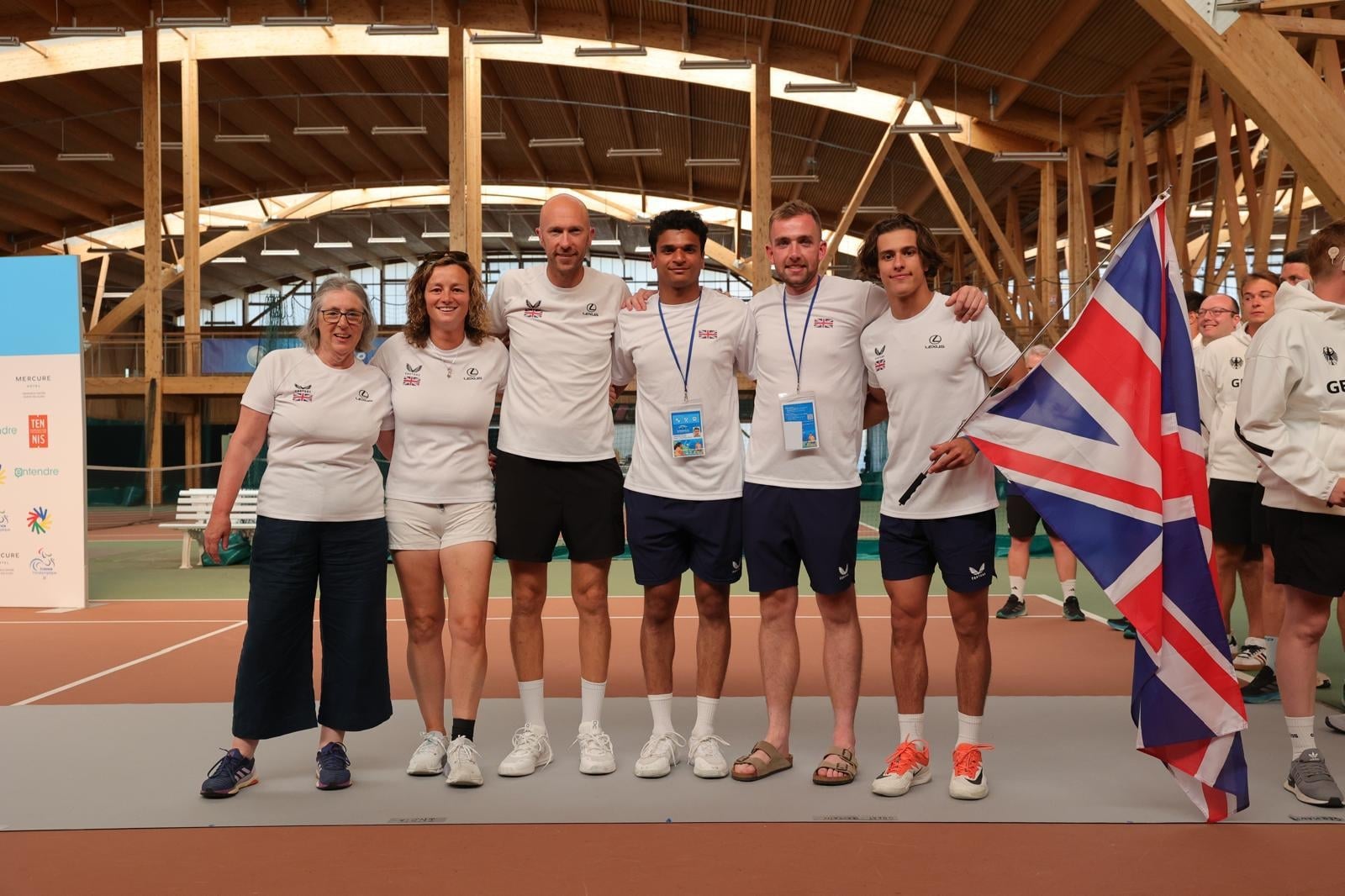
The players were disappointed to miss out on a semi-final spot and deserved to be there,” said Fletcher, who won a gold medal in the 2009 Deaflympics during her own decorated playing career.
“I hope they will take away the positives from the trip and how much we improved as a team. The commitment and quality our players showed was great and this experience should make us stronger going forward and we have a lot to build on for the future.”
Who can compete in deaf tennis?
To be eligible, a player has to have an average hearing loss of 55dB or more in their best ear. When competing players must remove cochlear implants and hearing aids before starting the warm-up before the match. The reason for this is to allow it to be an even playing field for all.
Players with a learning disability and autism or those who are deaf or hard of hearing have the opportunity to play tennis through the LTA Open Court programme, a national scheme that actively promotes and delivers opportunities for disabled people to get involved in tennis and padel.
For those looking to compete, the LTA stages a year-round disability tennis competitions calendar to give disabled people and those with long-term health conditions a chance to compete in learning disability and autism, deaf, para standing, visually impaired, and wheelchair tennis. In 2026 the LTA has significantly increased investment in disability tennis competitions and exhibitions by nearly 25%.
The LTA runs performance programmes for Learning Disability, Deaf, and Visually Impaired Tennis, while financial support is also given to elite Para Standing Tennis by the LTA – giving more players the chance to represent Great Britain on the international stage.
Disability tennis
Head to our disability tennis pages to find out more about Learning Disability and Autismm tennis, Deaf tennis, and other formats of the sport to get involved in.