British gold-rush at Visually Impaired World Championships
• 2 minute read
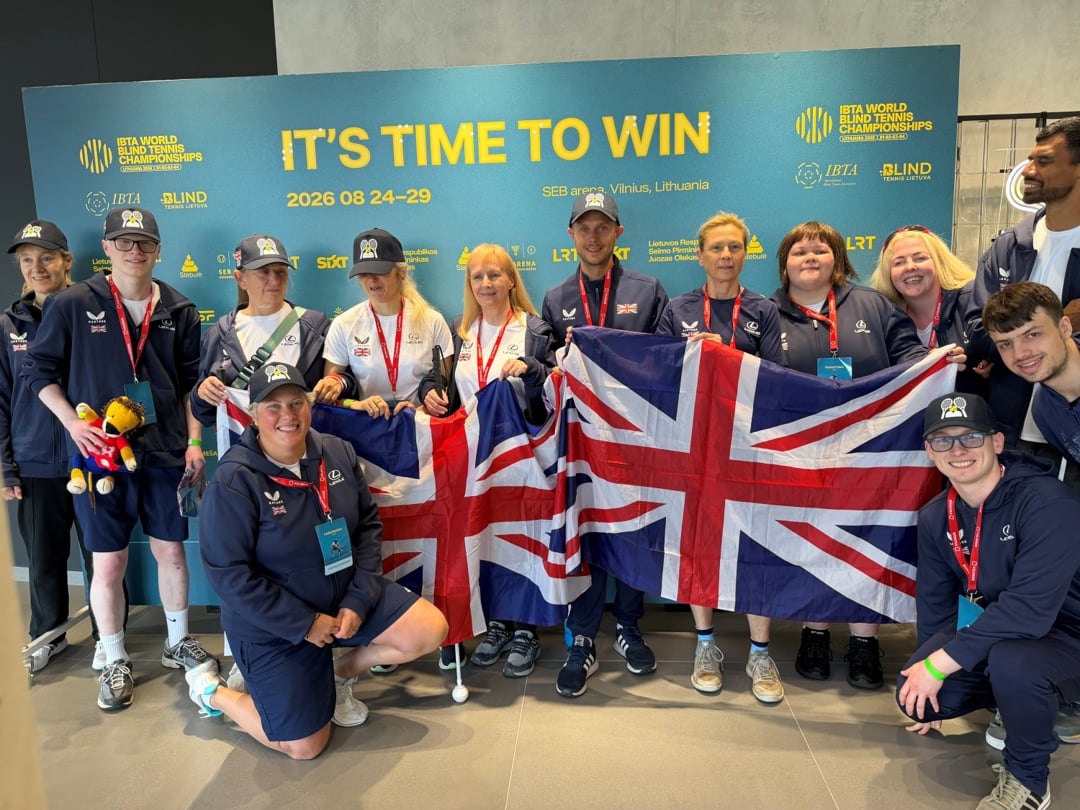
The best visually impaired tennis players in Great Britain served up some impressive performances at the 2026 International Blind Tennis Association (IBTA) World Championships in Lithuania.
The tournament was contested over five days at the SEB Arena in Vilnius, featuring 320 matches across 31 different events.
The Great Britain team was led by coach Louise Assioun and produced some high-quality tennis, with Naqi Rizvi and his Australian partner Isaiah Muller claiming a gold medal in the B1 men's doubles, beating the Finnish pair Pekka Rantanen and Jani Kallunki in the final.
Rizvi also excelled in the B1 men’s singles, as he collected a silver medal after missing out in the final against Kallunki.
The British duo of Tracy Compton and Yvette Priestley took a gold medal for Britain in the B1 women's doubles, as they beat the Italian pair Rosa Daniela Pierri and Mariarosa Scotton in the final.
It has been a hugely successful World Championships for Team GB, and I couldn’t be prouder of what this group has achieved and the way they have represented GB Blind Tennis.
Ewan Hayward and his Australian partner Arato Katsuda-Green claimed a silver medal in the B4–B3 men's doubles and Hayward won bronze in the B4 men event.
There was also a bronze medal for Lucas McClay in the B3 men’s tournament, with Great Britain finishing second in the final medals table behind Australia.
The Great Britain team also featured:
- Rosie Pybus (B4 Women’s Player)
- Andrea Logan (B3 Women’s Player)
- Louise Evans (B3 Women’s Player)
- Helen Potter (B3 Women’s Player)
Independent from the Great Britain team, British player Ivan Rodriguez-Deb saw success, winning gold in the B4 Men’s singles.
Louise Assioun, Great Britain coach for the IBTA World Championships 2026, said: "It has been a hugely successful World Championships for Team GB, and I couldn’t be prouder of what this group has achieved and the way they have represented GB Blind Tennis.
“I am incredibly proud of every one of our GB players and the way they have represented their country at these World Championships. Their professionalism, commitment and determination, both on and off the court, have been outstanding.
“We have seen some fantastic performances and achievements on court, but for me, the success of this tournament goes far beyond results and medals. The team spirit within the GB squad has been brilliant – players supporting each other, celebrating each other’s successes and coming together as one team.
“One of the things that makes an international tournament like this so special is the opportunity to build friendships and connections with players and coaches from around the world. There has been a real sense of respect, camaraderie and shared passion for Blind Tennis throughout the week.”
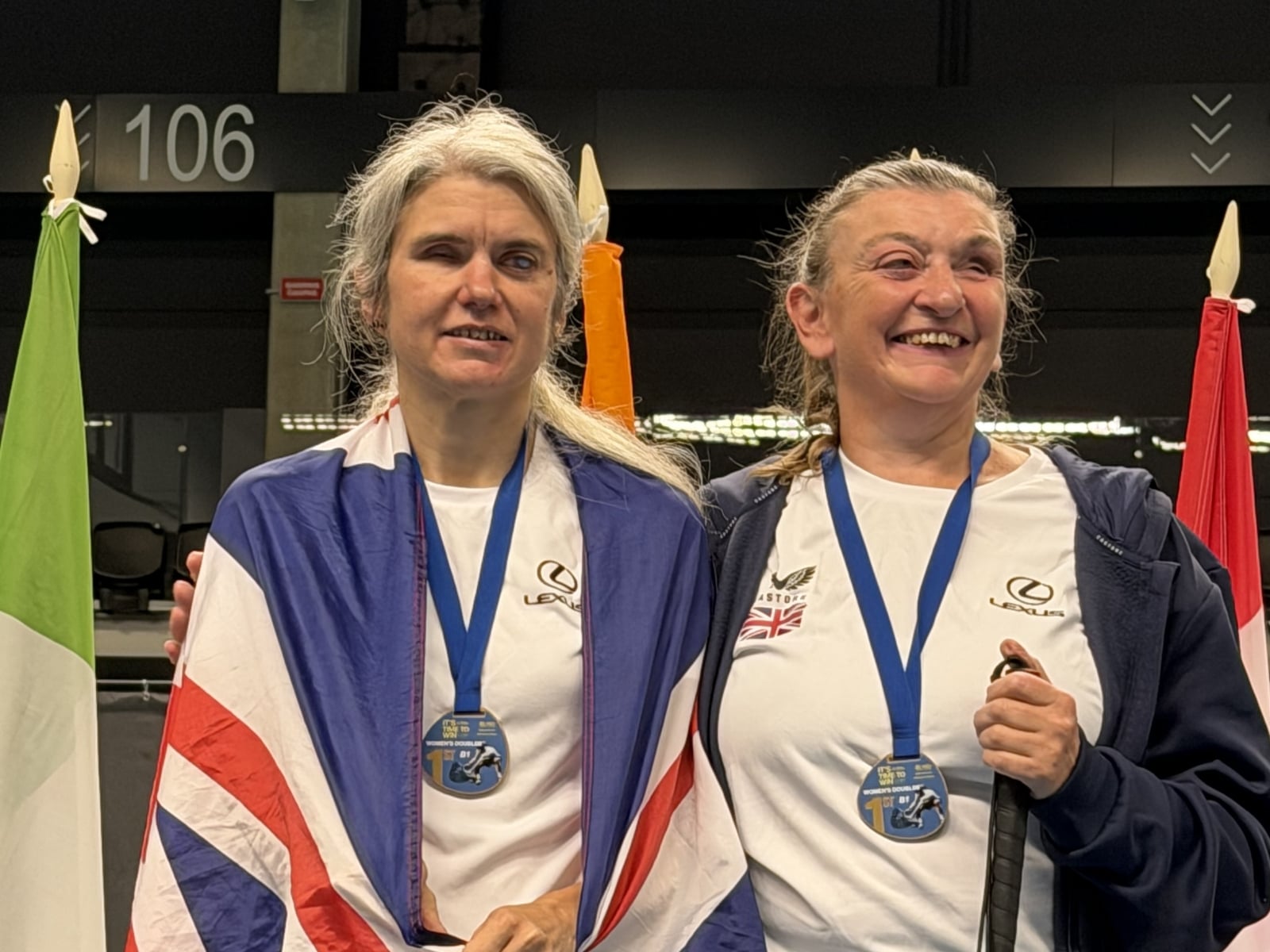
Yvette Priestley (left) and Tracy Compton took home gold for Great Britain in the B1 women's doubles
Tracy Compton said: “It’s been totally awesome. I’m speechless. It’s been fantastic. Winning the gold medal with Yvette was incredible and over the past few days, I’ve played my best tennis in a long time. My commitment on court was 100 per-cent and my serves were spot on. I stepped up to the plate and delivered. I’m proud of what we have achieved and for anyone out there who has issues with sight loss, get on court with me and I’ll show you what’s possible.”
Lucas McClay said: “It’s been brilliant. It’s been a great experience. I didn’t expect to come away from the tournament with a bronze medal around my neck, so I’m very happy. For anyone out there with sight loss, give tennis a try. Everyone is very friendly, and this is a great community.”
The IBTA World Championships are the largest blind tennis event in the world and this was the first time Lithuania was the host nation for the tournament.
The format of visually impaired tennis varies based on sight criteria of the athletes and depending on the category, a player may have up to three bounces of the ball before returning it to their opponent.
In the B1 category, for those having the greatest degree of sight loss or no sight, three bounces are allowed, and players typically wear eye masks.
B2, B3, B4 and B5 categories are contested by players with different degrees of partial sight, with B2 players allowed three bounces, B3 players allowed two bounces and B4 and B5 players allowed one bounce.
Visually Impaired Tennis
Head to our dedicated Visually Impaired Tennis pages to find out more about the sport and how you can get involved