Unity on court: How faith is growing tennis for all at Queen’s Park in Bedford
• 4 minute read
This year’s South Asian Heritage Month celebrates the “Unity in Diversity”, a message that is being brought to life each week on the courts in Bedford’s Queen’s Park.
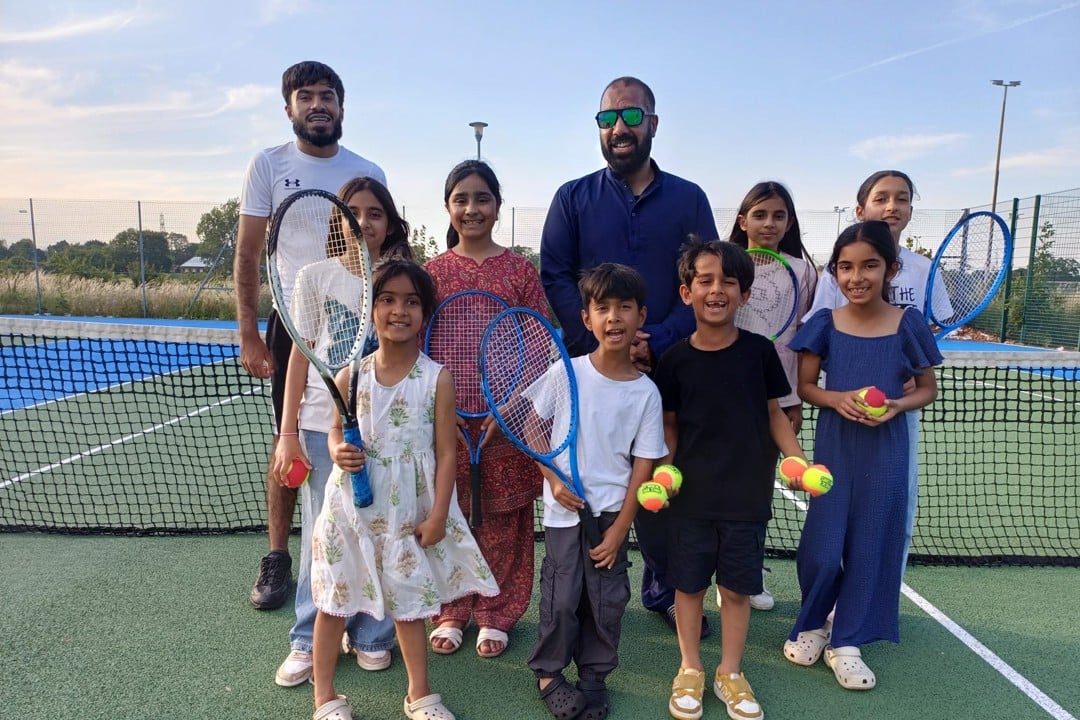
Through Faith in Queen’s Park (FiQP), local coach, teacher and community leader Abid Hussain is uniting young people from different faiths and South Asian backgrounds and encouraging them to get active through sport - creating something that goes far beyond tennis.
A long-time cricket coach, Abid’s introduction to tennis was simple and practical. Rather than start something new from scratch, he built it into what already existed.
“We were approached to deliver some tennis sessions, and I just thought, we’ll tie it in with the cricket,” he says. “I’m there for two hours anyway, so it made sense to bring the two together.”
Abid, who is of British Pakistani heritage, completed his activator training through the LTA. What began as a small addition has since developed into a fast-growing, inclusive programme.
The sessions launched in 2025 with around 25 participants across two groups, and numbers have steadily increased through word-of-mouth, local school partnerships and community WhatsApp groups. Participants have also been recruited via local mosques, gurdwaras and churches, helping to build a diverse and engaged community.
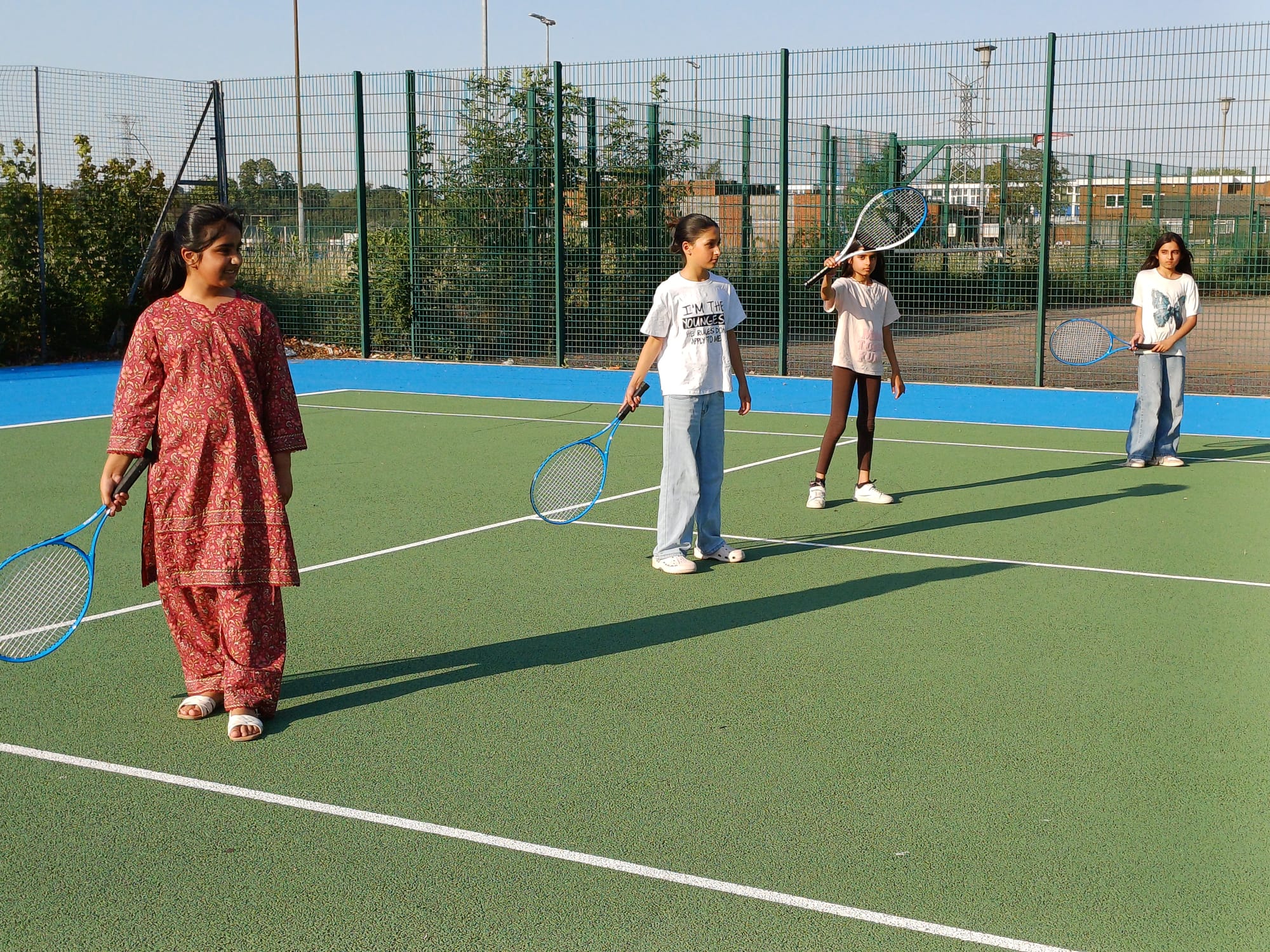
Now sessions on Friday evening regularly attract around 20 older players up to age 15 and over 25 younger participants up to age 11. The sessions create a supportive environment for both beginners and more confident players. While older sessions are still largely boys, younger groups are more balanced, with girls forming a growing part of those taking part.
Making it free and accessible has opened the door for so many families.
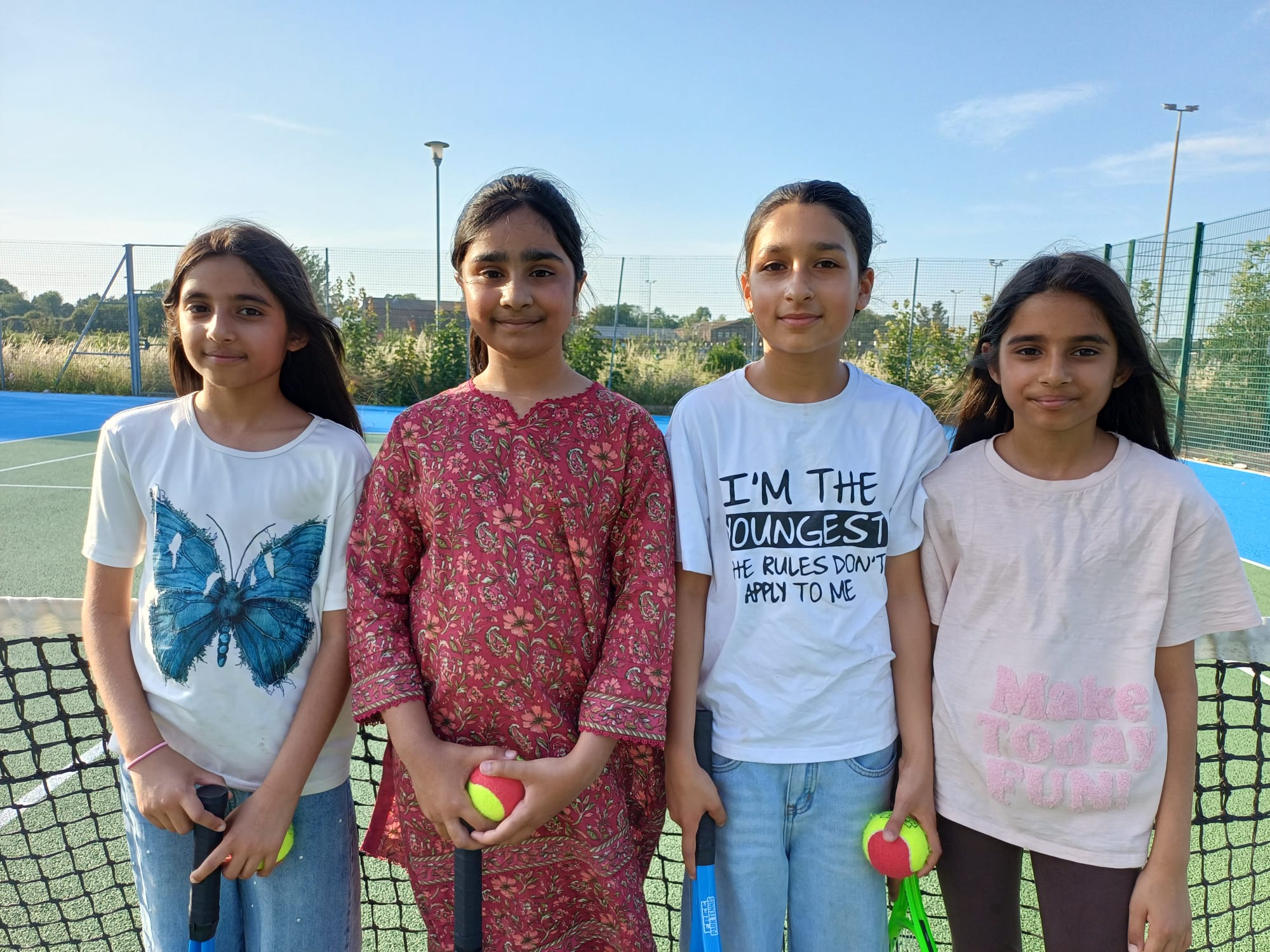
10-year-old Nawara said: “I like tennis because when you are at home, you're just always on your electronics. Outside you can have fun, explore nice games and your friends can come with you too.’’
Anaya loves it too. She said: “The coaches are really funny and nice, and you don't have to stay indoors.’’
A key factor in this growth has been access to quality facilities. The sessions take place on courts refurbished through the Park Tennis Project. The Project was a nationwide investment by the UK Government and LTA Tennis Foundation, delivered by the LTA, to refurbish public tennis courts - providing a welcoming and accessible space for local people to get active and play. More than 40,000 pounds was spent on refurbishing the two courts in Queen’s Park, bringing them back to life.
A core priority for FiQP is removing barriers to participation. Delivering sessions free of charge has been central to that success, particularly in a community facing economic challenges. The LTA supplied equipment including rackets, nets, balls and more to get the group up and running.
“It being free is massive,” Abid says. “The financial barriers - equipment, session costs - can be too much for some families, especially with the cost of living.”
Queen’s Park sits within one of the UK’s more deprived areas, and access to affordable sport is not always guaranteed. By removing these barriers, the LTA and FiQP is opening up opportunities for young people who might otherwise miss out.
“Making it free and accessible has opened the door for so many families.”
The programme is also evolving to better support girls’ participation, with plans to introduce dedicated girls-only sessions as mixed sessions can sometimes act as a barrier too. Working with local community groups, the aim is to create spaces where girls feel confident and encouraged to get involved.
Queen’s Park is rich in cultural and religious diversity, with Christian, Muslim, Sikh and other communities living side by side. Places of worship sit within a few hundred metres of each other, and FiQP reflects this diversity in its work.
“It’s about bringing all the kids together - that’s where the magic happens.”
For Abid, this sense of togetherness is central to everything he does. The sessions themselves are deliberately informal, helping to challenge perceptions that tennis is exclusive.
“It’s not Wimbledon - it’s just a fun, welcoming space where you can come and play in the park,” he says.
That relaxed, inclusive approach has helped build strong connections between participants, creating a positive environment where older children naturally support younger ones.
A key ambition for Abid and the LTA is developing young people from ethnic diverse backgrounds beyond participation.
By encouraging older players to step into coaching roles, we are creating a pathway for future leaders within the programme. The LTA is committed to increasing the number of coaches from ethnically diverse communities entering and advancing within the sport. Further details on how to become an activator are available on our webpage, alongside information on bursaries and grants to support coaches from diverse backgrounds.
“What I want to do is improve everyone holistically,” he explains. “I want the older kids who are considering their career options to consider becoming coaches .”
James Stephenson, LTA Delivery Manager, said: “As part of our ongoing commitment to building a culture of inclusion and belonging across tennis and padel, we are deepening our engagement with faith-based and ethnically diverse communities through our Connecting Communities work.
“What Abid has created in Queen’s Park is a brilliant example of this in action. He’s built a meaningful connection between tennis and his local community- helping to make the sport feel more visible, accessible and relevant.
“Seeing ‘people like me’ in roles like coaching and leading sessions is incredibly powerful. It inspires more people to get involved, not just as players but as volunteers and future coaches. Role models like Abid are vital, and we need more of them across the sport.’’
James added: “While participation continues to grow, we know there is still underrepresentation - particularly within the workforce. We are working on initiatives that create more inclusive pathways and ensure that everyone feels they belong in tennis.”
In Queen’s Park, tennis is more than just a game. It is a space where differences come together, friendships are built, and young people feel part of something bigger. For Abid, the goal remains simple: to create a space where everyone feels they belong and can enjoy the game.
Abid’s grassroots work reflects the core mission of the LTA’s wider inclusion strategy.
There are a number of ways to get involved and help drive change. As part of the LTA’s Connecting Communities – Ethnically Diverse Communities Plan, the network offers mentoring, panel discussions, webinars, and valuable networking opportunities.