
Essential doubles tactics & hand signals
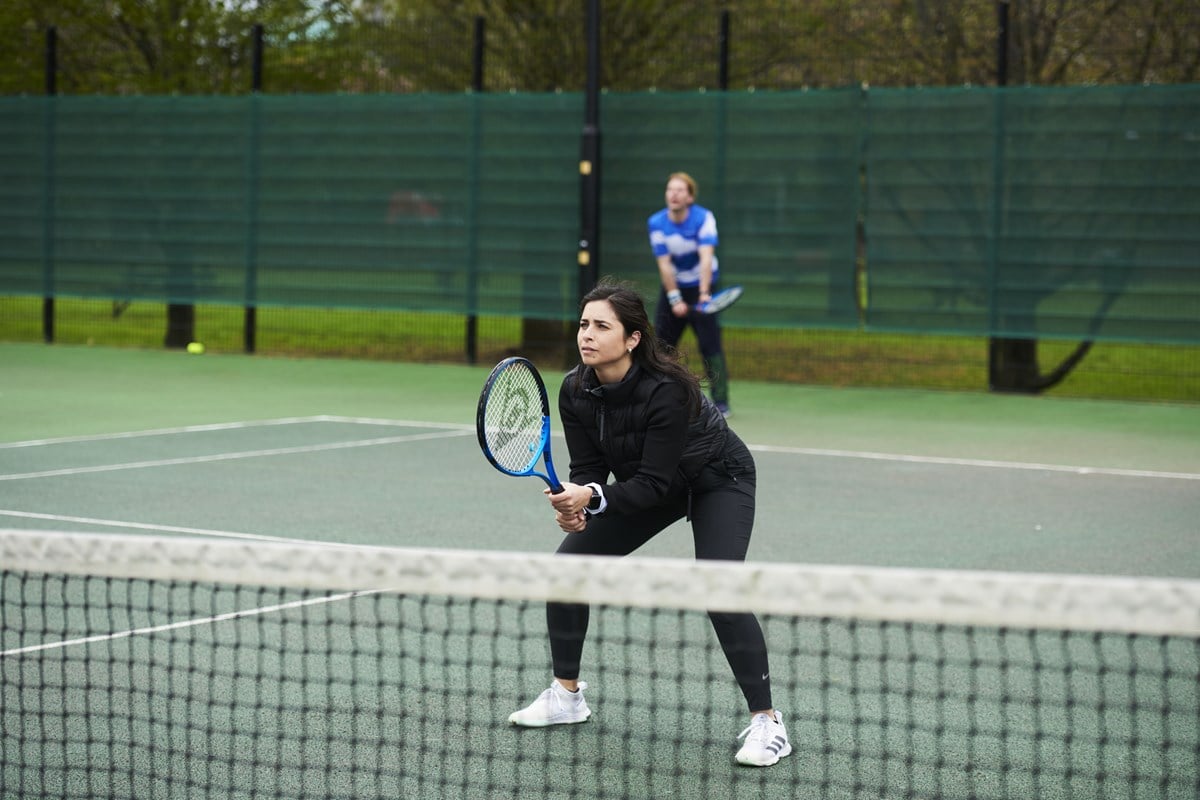
Doubles is the most commonly played form of tennis in Britain and is great fun to play with friends and family.
If you’re starting to play a bit more competitively and looking to take your doubles game to the next level – you’re going to want to think about different strategies for your game.
LTA expert tennis coach Matt Smith explains some important doubles tips, strategies and tactics to improve your game on court.
Positioning and movement at the net
It’s important to remember that there are four roles in doubles – server, server’s partner, returner, and returner’s partner.
All four players need to be active throughout the point. You don’t want to get caught out watching at the net.
The server’s partner and returner’s partner have to be ready and waiting to take the ball at the net and constantly on the move depending on different game states.
If you’re attacking, you want to push further into the net. If you’re neutral in the point, the net player should be in the middle of the service box and if you’re defending, you should stand closer to the service line.
As well as covering forwards and back depending on the situation, you also need to think about covering side to side. You want to move with your partner to cover the court at all times.
If they push out wide, you come towards the middle to cover the middle. If they squeeze in, you can push out more, etc.
This level of teamwork is crucial for any successful doubles team. Doubles players need to move in tandem.
Three key doubles tactics
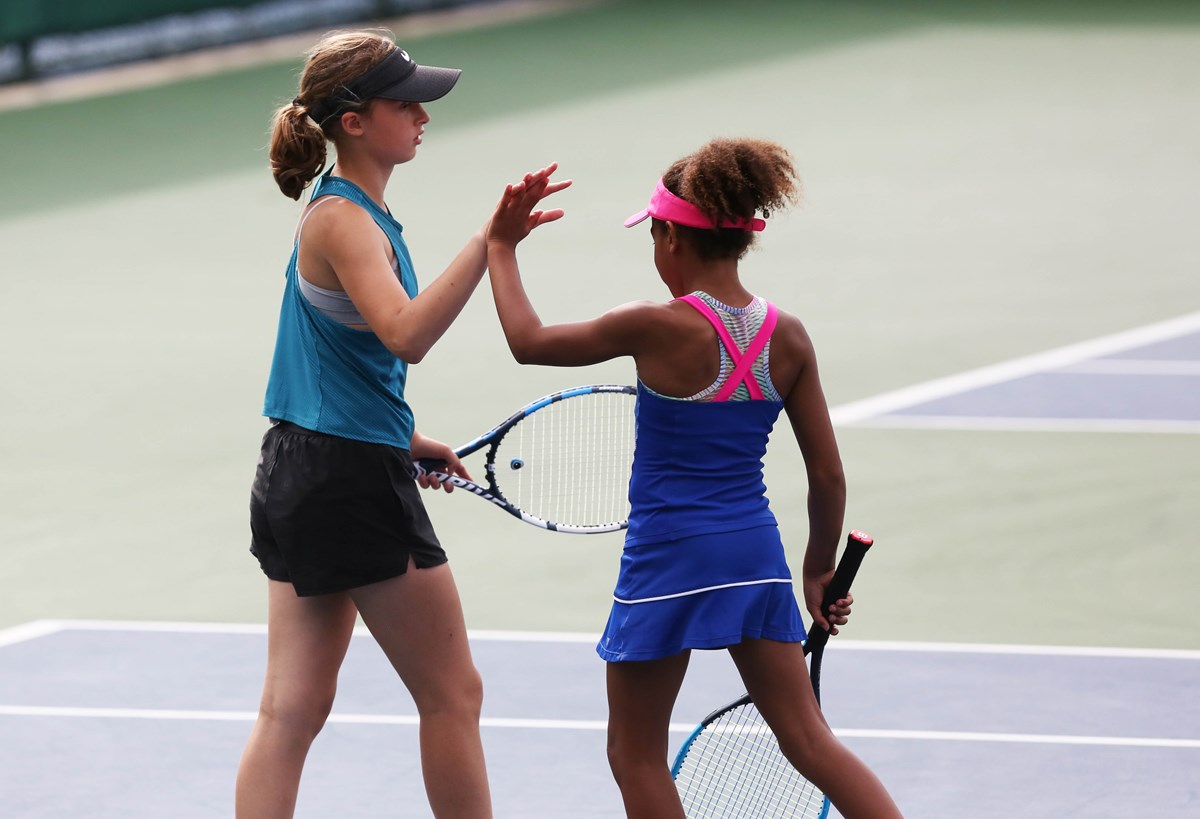
In doubles, there are three fundamental tactics or strategies that all teams should consider to help win more points in matches.
1. Play the percentages
It may sound obvious but often playing the shot that is most likely to go in will help you win more points.
Give yourself that extra margin for error and ask more questions of your opponent.
Particularly at club level, playing that extra ball on every point can make a huge difference to the outcome of the match.
2. Make them play low percentage
Building on the first tactic, you want to try and make life as difficult for your opponents as possible.
You want to position yourself so it’s hard for them to beat you in the point or give your opponents shots that are difficult to return as a winner e.g. low slice, deep to the baseline, etc.
This will put more pressure on your opponents and then they are more likely to make mistakes.
For example, closing the net down when your partner is in a cross court battle makes it harder for them to pass you. You can also pretend to cross-over to the other side. Thees are two plays that can make players take risks leading to an error.
3. Change it up
Don’t let your opponents get too comfortable – make sure you’re giving them different types of shots with a variety of direction, spin, tactics, etc.
Adding more variety means they can’t get comfortable in the rallies and keeps them guessing about what you’re going to do next. The more they are questioning what you’re going to do, the more reactive they will have to be in the point.
Doubles hand signals
It’s good to have premeditated ideas of how you want the point to go.
When you talk between points and even inbetween serves, there should be a goal – whether it’s the direction of the serve, type of serves, how the service partner is going to react after, etc.
When doubles players aren’t talking about tactics, they will use hand signals – usually by the service partner at the net.
If you watch on TV, you will see players pointing in different directions to each other to plan out the first few shots in advance.
There are usually at least two signals before each serve:
The first will be where the direction they want their partner to serve – using either the little finger, index finger or thumb to indicate if they want the ball down the T, in the middle of the service box, or out wide.
The second indicates where the server’s partner is going to move after the point. An open hand would mean they are going to come across to try and intercept the return, and a clenched fist means they are going to stay.
Book a tennis court
Find your nearest tenis courts and book your next hit.